Tips for Designing Your Bridal Bouquet
Your bridal bouquet is the accessory you’ll hold in nearly every photo, from the aisle walk to the first look to the family portraits. It’s also one of the most personal details of your whole wedding. The right bouquet echoes your dress, your colors, and your style, and the best part is that designing one is a blast.
Whether you’re working with a florist or dreaming up ideas on your own, these tips will help you design a bridal bouquet that looks stunning, feels comfortable in your hands, and fits your budget. If you’re still gathering inspiration, start with our wedding bouquet ideas and inspiration and then come back here to build your design.

Photo by B Lauren Photography
1. Start With Your Dress
Your gown is the best place to begin. Think about the neckline, silhouette, fabric, and level of detail, because your bouquet should complement the dress, not compete with it. A dress with lots of beading, lace, or embellishment often pairs beautifully with a simpler bouquet, while a clean, minimalist gown can handle a more dramatic, abundant arrangement. If you have a photo of your dress, bring it to your florist, along with a swatch of the fabric if possible. Size and shape matter too. A fitted gown looks great with a smaller, elegant bouquet, while a ball gown has the volume to carry a larger cascading or full round design. Pay attention to where you’ll hold the bouquet and make sure it doesn’t hide important details at the waist or bodice.
2. Choose Your Color Palette
Your bouquet colors should tie into your overall wedding palette, including bridesmaid dresses, centerpieces, and decor. Here are a few directions to consider: A soft, romantic palette of blush, cream, and white feels timeless and goes with almost everything. A bold, jewel-toned palette of burgundy, plum, and deep green makes a dramatic statement, especially for fall and winter. A bright, colorful palette of coral, yellow, and orange feels joyful and playful, while a monochrome bouquet in a single color family looks sleek and modern. If you’re stuck, pull colors from your venue, your season, or even your favorite outfit. Our guide to bridesmaid dress color trends for 2027 is a great place to find palettes that photograph beautifully together.
3. Pick the Right Shape and Style
Bouquet shape sets the whole mood. Here are the most popular styles:
- Round. A classic, compact dome of flowers. It’s timeless and works with nearly any dress.
- Cascading. Flowers and greenery flow downward in a flowing, waterfall effect. It’s dramatic and romantic, and it works well with formal gowns and long silhouettes.
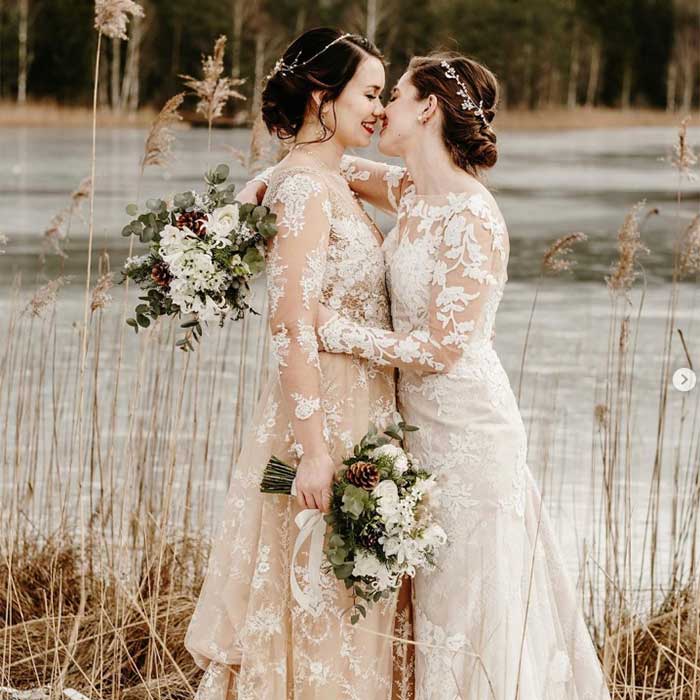
- Hand-tied or garden-style. Loose, natural stems gathered together for an organic, just-picked look. It’s perfect for garden, barn, and outdoor weddings.
- Posy. A small, petite bouquet that’s easy to hold and ideal for a simple or vintage-inspired gown.
- Crescent or arm bouquet. A long, elegant arrangement carried in the crook of the arm, great for a statement look.
- Pageant or presentation. A long-stemmed bouquet cradled across the arm, often featuring a single flower like roses or lilies.
- Think about your venue and style too. A formal ballroom wedding might call for a structured round or cascade, while a rustic or lakeside ceremony suits a relaxed, hand-tied bundle.
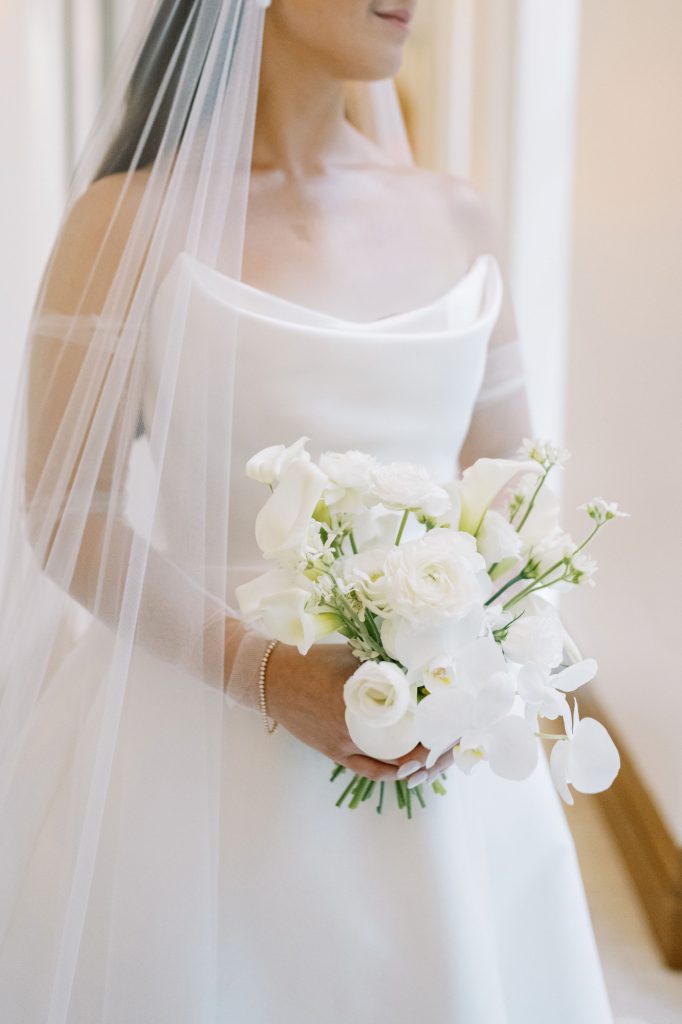
Photo by Samantha Leigh Studios
4. Choose Flowers You Love
Next comes the fun part: picking blooms. Start with a few flowers you adore, then add supporting varieties for texture and shape. A good bouquet usually includes a mix of:
Focal flowers. Larger, eye-catching blooms like roses, peonies, ranunculus, garden roses, or dahlias.
Filler flowers. Smaller blooms like spray roses, waxflower, or baby’s breath that add fullness and fill gaps.
Greenery. Eucalyptus, ferns, ruscus, or olive branches add shape, movement, and a fresh scent.
Accent elements. Berries, dried grasses, pampas, feathers, or even brooches add unique texture and personality.
Use meaning to guide your picks if you like. Roses symbolize love, peonies are often associated with romance and good fortune, and lilies are tied to purity. Whatever you choose, make sure each flower is available in your wedding month and holds up well out of water for several hours.
5. Design Around the Season
Seasonal flowers tend to be fresher, more affordable, and easier for your florist to source. In Michigan, you’ll typically see tulips and lilacs in spring, peonies in late spring and early summer, and sunflowers, zinnias, and dahlias in late summer and fall. Winter weddings pair well with evergreen sprigs, amaryllis, and rich berries. Availability can shift from year to year, so ask your florist what’s at its best for your date. If you have your heart set on a flower that’s out of season, talk to your florist early. It may be possible, but it can cost more and need more lead time. Our guide to budgeting for wedding florals in 2027 can help you plan ahead.
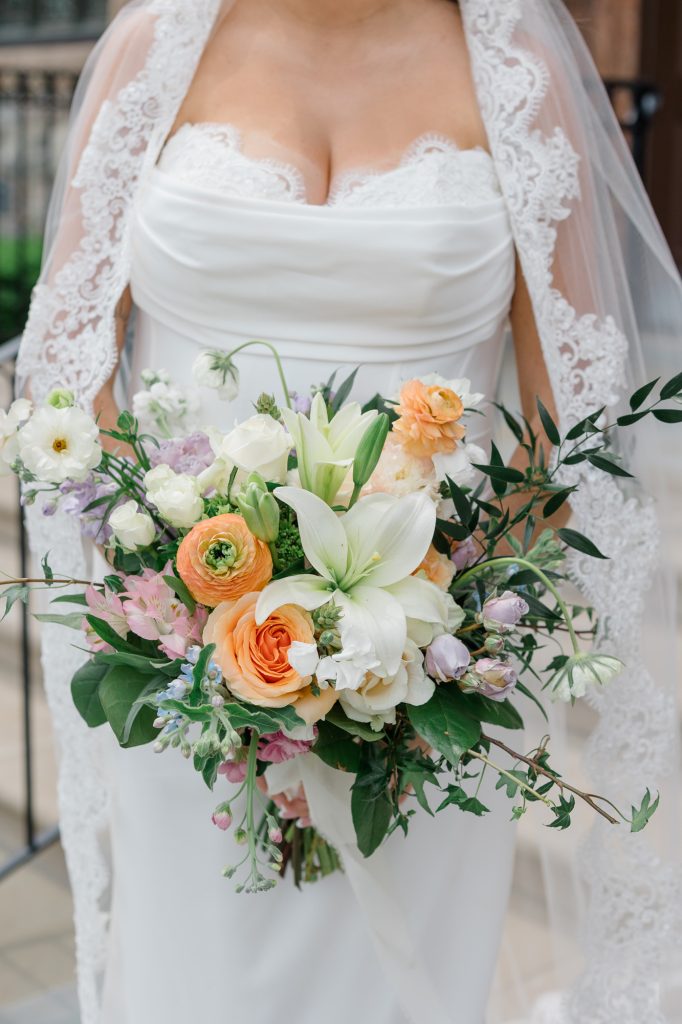
Photo by Weddings by Cheyenne
6. Think About Size and Weight
Bouquets look different in photos than in a florist’s studio, so be practical about size. You’ll be holding it for hours, so it should feel comfortable, not heavy or awkward. If you’re petite, a smaller bouquet usually looks proportional, and if you’re taller or wearing a big gown, a larger design can look beautiful. Ask your florist to let you hold a sample bouquet or a similar-sized arrangement so you can check how it feels. Stem wrap matters too. Ribbon, lace, or fabric wraps look polished and can add a personal touch, and an ergonomic handle helps keep your hands comfortable.
7. Add Meaningful Details
Little personal touches can turn a pretty bouquet into one you’ll treasure forever. Consider wrapping the stems with a piece of fabric from a family member’s wedding dress, attaching a small charm or locket, or adding a ribbon in your wedding colors. Some brides tuck in a flower from a family garden or a bloom that reminds them of a loved one. A small note or photo charm is a sweet way to honor someone who can’t be there.
8. Plan for Photos and Preservation
Before you finalize your design, think about how the bouquet will look in photos. Soft, lighter colors can look washed out against a white dress in bright sunlight, and very dark colors can disappear against dark backgrounds. Ask your florist and photographer about contrast and texture. Our roundup of Michigan wedding photographers you’ll love is a good place to start if you’re still hunting for one.
If you want to keep your bouquet after the wedding, mention it early. Some florists can recommend flowers that dry well, and many offer preservation services. You can also order a smaller “toss” bouquet so you can keep the real one.

Photo by Kailee Marie Photography
9. Don’t Forget the Rest of the Bridal Party
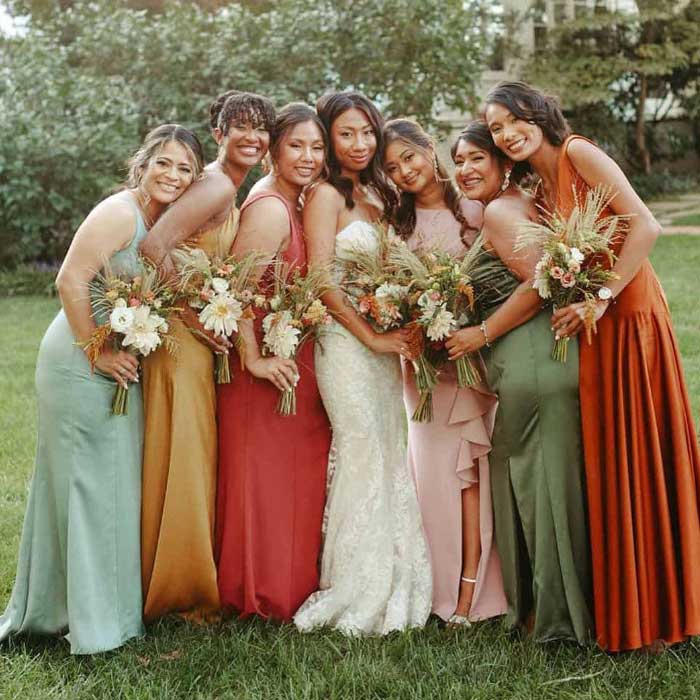
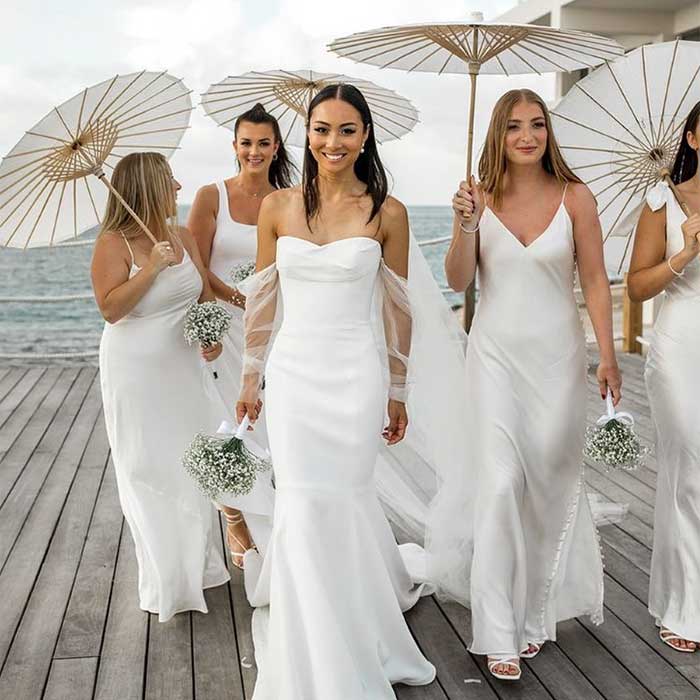
Your bouquet should be the star, but it should match the bridesmaids’ bouquets in style and palette. Many brides choose bridesmaid bouquets that are smaller, use fewer flower types, or feature simpler versions of the same blooms. That way yours stands out while the whole group looks cohesive. Boutonnieres and corsages are easy places to repeat a flower or color from your bouquet.
10. Set a Budget and Work With a Florist
Bridal bouquets can range from simple and affordable to very elaborate, depending on flower types, size, and design. Discuss your budget upfront, and ask your florist where to splurge and where to save. For instance, using a few premium focal flowers with more affordable fillers and greenery creates fullness without a huge price tag. Our wedding floral checklist walks you through everything to ask and decide.
To find a florist who matches your style, browse Nearlywed’s Michigan wedding vendor directory. Bring photos of bouquets you love, your dress details, your color palette, and your budget to your first consultation.

Photo by Savannah Faith Photography
Frequently Asked Questions
How big should a bridal bouquet be?
It depends on your dress and height. A fitted gown or petite frame often looks great with a smaller bouquet, while a ball gown can carry a larger one. Your florist can help you find the right proportions.
What flowers last the longest in a bouquet?
Sturdy flowers like roses, orchids, lisianthus, and many greenery types tend to hold up well through the day. Delicate flowers can wilt faster, so ask your florist which blooms suit your season and timeline.
When should I order my bridal bouquet?
Many couples book their florist 9 to 12 months before the wedding. Flower selections are usually finalized closer to the date, once availability is clear.
Should my bouquet match my bridesmaids’ bouquets?
It should coordinate with them but usually stands out in size, flower variety, or detail.
Can I use silk or dried flowers for my bouquet?
Yes. Dried and faux flowers are popular for lasting keepsakes and for budget-friendly designs. Some brides combine fresh and dried blooms for added texture.
you might also like
Check Out The Latest on Instagram
Check Out The Latest on Instagram
Follow us on Facebook and Instagram for more tips, resources, and inspiration!