How to Budget for Wedding Florals in 2027
Flowers are one of the most emotional line items in a wedding budget and also one of the most volatile. Unlike your venue or your dress, which come with a fairly fixed price tag, floral costs swing wildly based on what you choose, when your wedding falls, and how elaborate your design gets. If you’re planning a 2027 wedding, here’s how to build a realistic floral budget from the start, so you can chase the look you want without a mid-planning sticker shock moment.
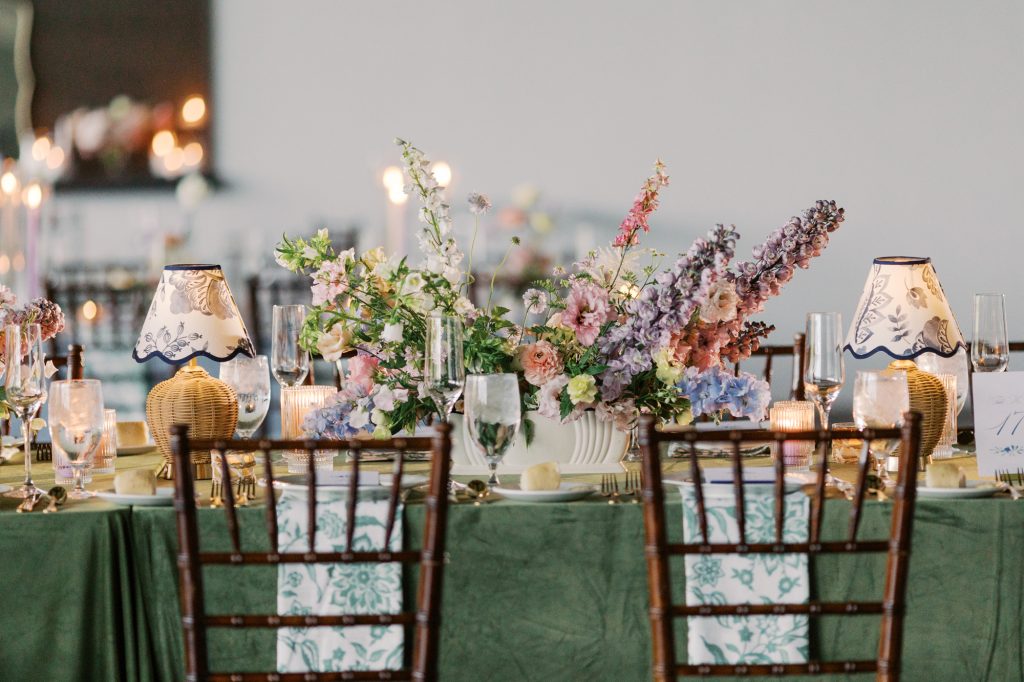
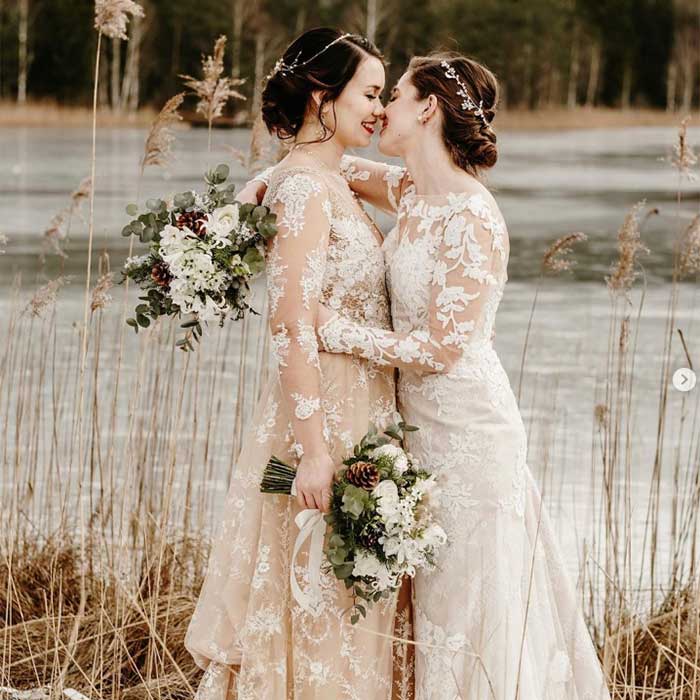
Photo by Kellie Hetler Photography
What Do Wedding Flowers Typically Cost?
Based on current 2026 industry data, most US couples spend somewhere between $1,500 and $6,000 on wedding flowers, with the national average landing around $2,800 to $3,500. Full-service florists handling both ceremony and reception design typically run higher, often $4,000 to $7,500, while couples working with a smaller floral scope, personal flowers and a few accent pieces, can stay well under $2,000. As you budget for 2027, it’s reasonable to expect these figures to trend modestly upward with general inflation, so building in a small buffer above current averages is a smart move.
Florals typically account for 8 to 12 percent of a total wedding budget, though that figure climbs to 10 to 15 percent for couples who prioritize a floral-heavy design, and can reach 20 percent or more for luxury, installation-driven weddings. Where your wedding falls on that spectrum is one of the biggest budget decisions you’ll make.
Average Wedding Flower Cost by Wedding Size
Elopement or small ceremony (under 20 guests): $300 to $1,500. Covers a bouquet, boutonniere, and a small ceremony accent piece.
Intimate wedding (20 to 50 guests): $1,500 to $4,500. Personal flowers, a modest ceremony piece, and light table decor.
Classic wedding (75 to 125 guests): $4,500 to $9,000. Full personal flowers, ceremony florals, and centerpieces for every table.
Large wedding (150+ guests): $8,000 to $15,000 or more. Full personal flowers, a ceremony installation, and complete reception florals across a larger number of tables.
Luxury, installation-heavy wedding: $15,000 to $30,000 or more. Custom floral installations, hanging arrangements, arches, and premium or imported blooms throughout.
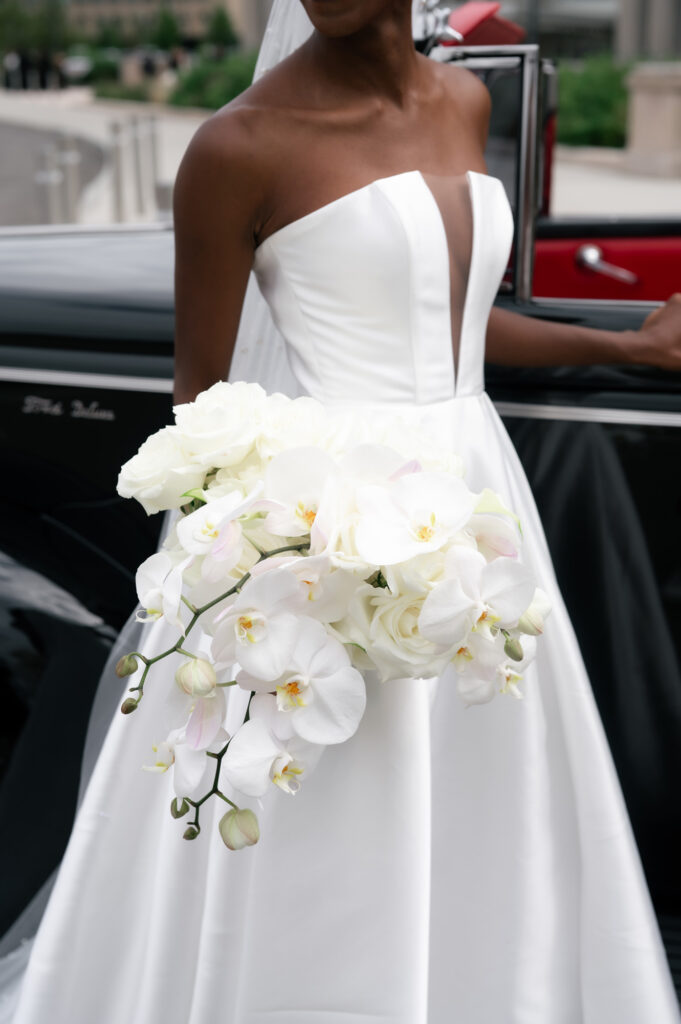
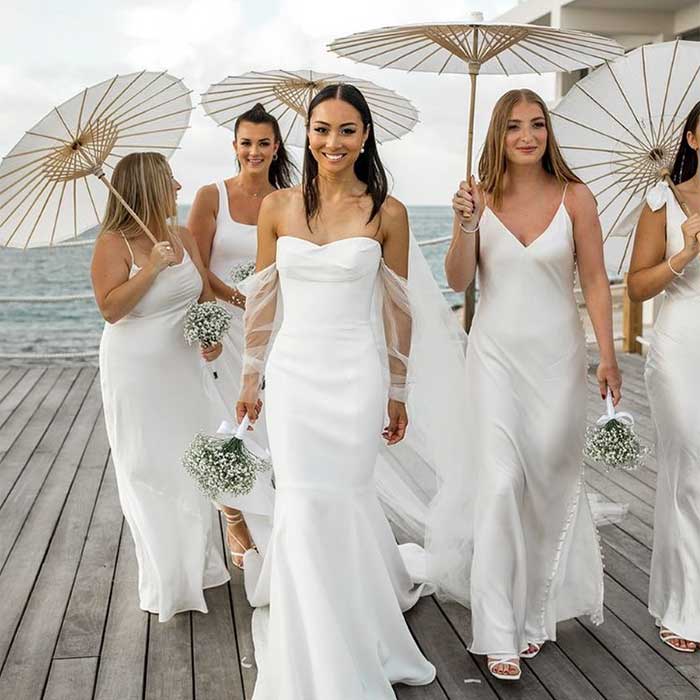
Photo by Patty Leonor Photography
What Drives Your Floral Budget the Most
- Centerpieces, almost always: Centerpieces are typically the single largest floral expense, often running $75 to $400 or more per table depending on size and complexity. On a 150-guest wedding with 15 tables, that alone can range from $1,500 at the budget end to $6,000 or more at the high end, before any other florals are considered.
- Flower choice and season: In-season, locally available blooms cost meaningfully less than out-of-season or imported flowers. Peonies, for example, are gorgeous but pricier and harder to source outside their late-spring window, while garden roses, ranunculus, and seasonal greenery offer a similar romantic look for less.
- Installations and structural elements: A floral ceremony arch, a hanging installation, or a large welcome display all add labor and material cost on top of your standard arrangements, often significantly.
- Guest count and table count: More tables simply means more centerpieces, so guest count has a direct, compounding effect on floral spend.
- Full-service versus DIY or hybrid approaches: A full-service florist handling design, delivery, setup, and breakdown costs more than sourcing flowers yourself or working with a florist on a more limited scope, like personal flowers only.
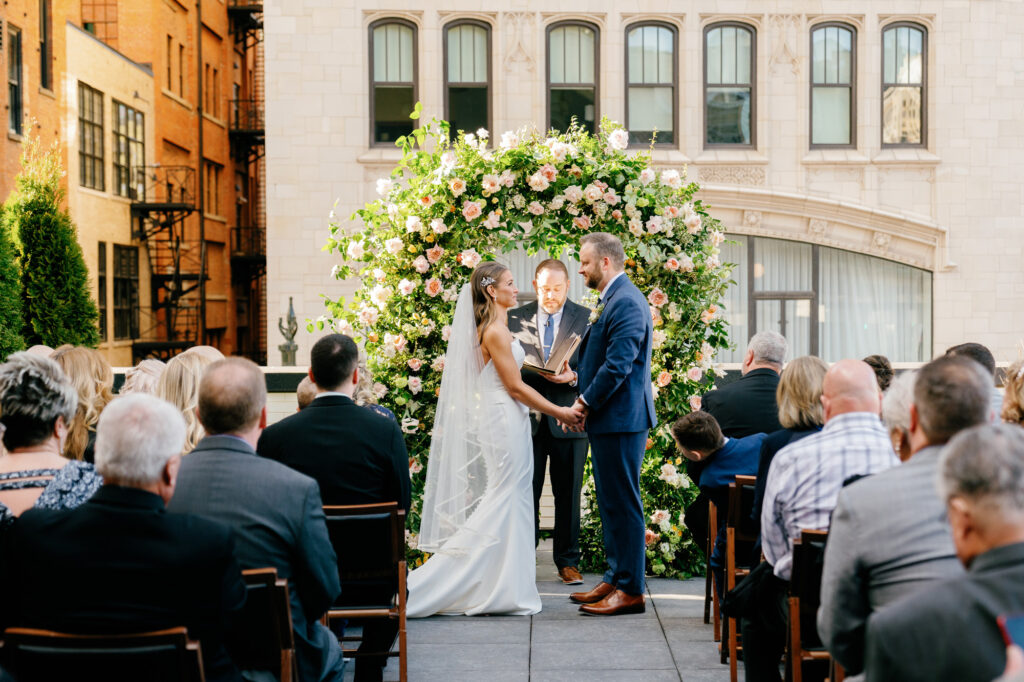
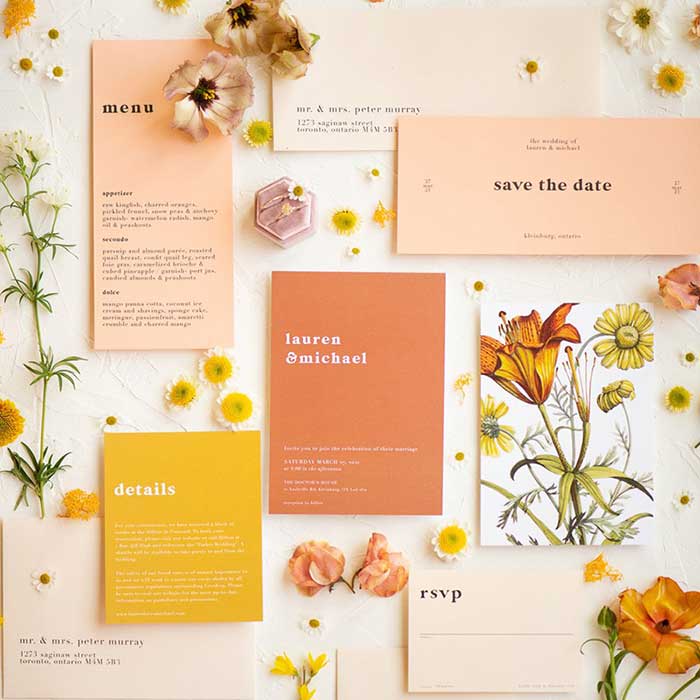
Photo by Shanell Photography
How to Build Your 2027 Floral Budget
- Start with a percentage of your total budget, then get specific: If flowers matter a lot to you, plan for 10 to 15 percent of your total wedding budget. If they’re a lower priority, 6 to 8 percent is realistic. From there, break that number down by category (personal flowers, ceremony, reception) rather than treating it as one lump sum.
- Prioritize where flowers matter most to you: Not every couple needs to spend evenly across every category. Some prioritize a dramatic ceremony backdrop and keep centerpieces simple; others skip a ceremony installation entirely and put the whole budget into lush, abundant tablescapes. Decide what you actually want guests to remember, and weight your spending there.
- Get quotes early, ideally 9 to 12 months out: Popular florists book up well in advance for peak season dates, and getting a detailed, itemized quote early lets you adjust your design before you’re locked into decisions under time pressure.
- Ask your florist for cost-saving substitutions: A good florist can often recreate the look of a pricier bloom (say, garden roses instead of peonies) at a lower cost without sacrificing the overall aesthetic. Bring reference photos and be upfront about your budget; florists work far more efficiently for you when they know the real number from the start.

Photo by Samantha James Photography
Smart Ways to Save on Wedding Florals
A few proven strategies can meaningfully lower your floral spend without making your wedding look budget-conscious. Choose in-season, locally available flowers over imported or out-of-season blooms. Let greenery do more of the visual work, since foliage costs less per stem than flowers and can fill out an arrangement beautifully. Repurpose ceremony flowers at the reception, moving an arch or altar arrangement to frame the sweetheart table or gift table after the ceremony. Mix in non-floral elements like candles, ribbon, or found objects (dried grasses, branches, fruit) to stretch your florals further per table. And consider renting larger installation pieces, like a floral wall or arch structure, rather than building one from scratch; our guide to items to rent instead of buy for your wedding breaks down real rental pricing for exactly this kind of decor.
For inspiration on styles that tend to be more budget-friendly by nature, wildflower and garden-style arrangements typically cost less than tightly structured, premium-bloom-heavy designs. Our bridal bouquet ideas for every wedding aesthetic is a great place to start browsing styles that fit a range of budgets.
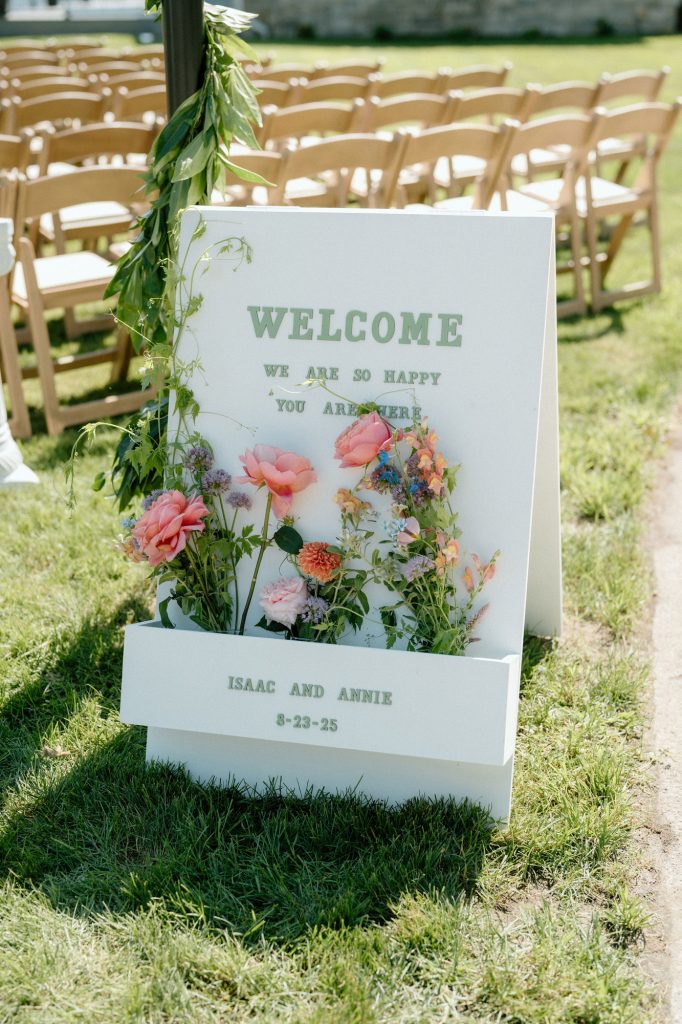
Photo by Jordyn Hayes Photography
Frequently Asked Questions
How much should I budget for wedding flowers in 2027? Based on current data, plan for $1,500 to $6,000 for most weddings, or 8 to 12 percent of your total budget, with a small buffer above current averages to account for typical year-over-year inflation.
What’s the most expensive part of a wedding floral budget? Centerpieces are almost always the single largest floral expense, since cost multiplies by table count. A large ceremony installation can also be a major expense if you choose to include one.
How can I save money on wedding flowers without it looking cheap? Choose in-season, local blooms, lean on greenery to fill out arrangements, repurpose ceremony flowers at the reception, and mix in non-floral decor elements like candles and ribbon to stretch your budget further.
When should I book my wedding florist? Aim to book 9 to 12 months before your wedding, especially for peak season dates (typically May through October), so you have the best availability and time to refine your design and budget together.
Start Designing With Your Budget in Mind
Beautiful wedding florals don’t require an unlimited budget, they require a clear plan. Decide what matters most to you, get quotes early, and lean on your florist’s expertise to stretch every dollar further.
For more planning tools, try our free wedding budget planner to see how your floral spending fits into your overall wedding budget, and when you’re ready to find your florist, browse Nearlywed’s Michigan wedding vendor directory.
Photo by McKenna Long Photo
you might also like
Check Out The Latest on Instagram
Check Out The Latest on Instagram
Follow us on Facebook and Instagram for more tips, resources, and inspiration!