LGBTQ+ Wedding Planning Guide for Michigan Couples
Planning a wedding is exciting, and it’s also deeply personal, especially when you’re figuring out which traditions to keep, which to reimagine, and which to skip entirely. For LGBTQ+ couples planning a Michigan wedding, that same excitement often comes with a few extra questions: which venues and vendors are genuinely welcoming, how to handle family dynamics that may be more complicated, and how to make sure the day feels authentically yours rather than borrowed from a template that was never built with you in mind.
This guide covers the practical side of planning an LGBTQ+ wedding in Michigan, from the legal basics to finding inclusive vendors to making the day feel unmistakably your own!
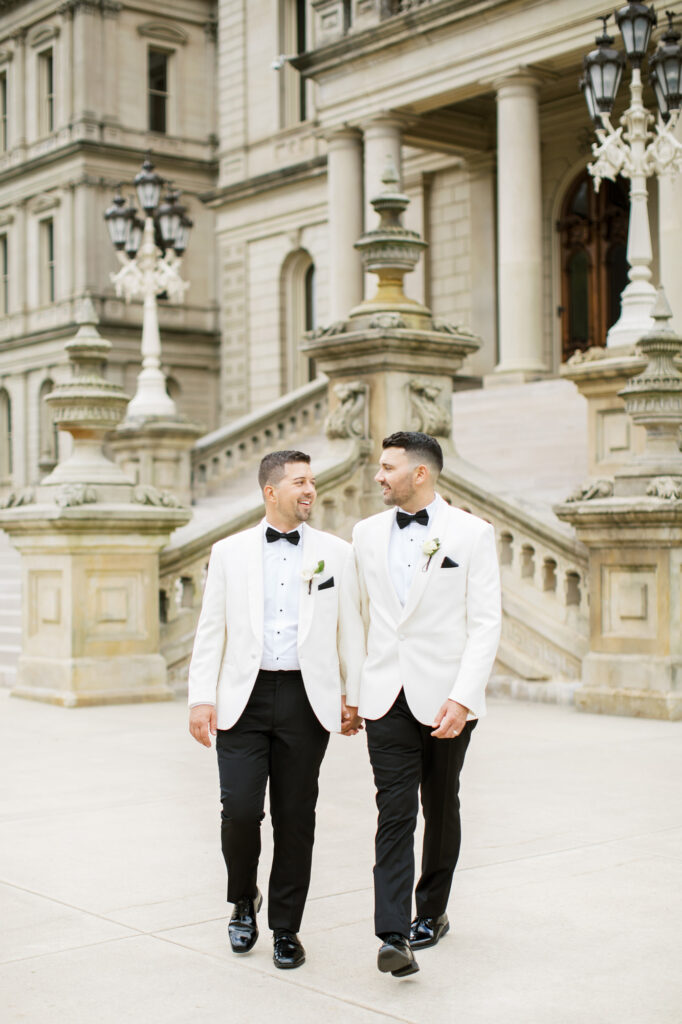
Photo by Lauren Wood Photography
LGBTQ+-Friendly Michigan Wedding Venues
One of the most common concerns LGBTQ+ couples raise while planning isn’t legal, it’s simply wanting to know a venue or vendor will actually welcome them, not just tolerate them. A few ways to find that confidence:
- Look for vendors who say so directly. Many Michigan venues explicitly note their inclusivity in their own marketing and vendor profiles. When browsing Nearlywed’s Michigan wedding venue directory and vendor directory, look for venues that list themselves as LGBTQ+ friendly directly in their profile, several already do, which is a clear, low-effort signal worth paying attention to.
- Ask directly during your first inquiry. A simple, direct question, “are you experienced working with LGBTQ+ couples?”, tells you a lot from the response alone. A vendor who answers warmly and specifically (rather than vaguely or defensively) is one worth prioritizing.
- Lean on LGBTQ+ wedding-specific resources for referrals. National directories like the Gay Wedding Institute or Equally Wed maintain vendor lists specifically vetted for LGBTQ+ inclusivity, which can be a helpful supplement alongside Michigan-specific research.
To make your search easier, here are Michigan wedding venues that explicitly confirm their LGBTQ+ inclusivity directly on their Nearlywed vendor profile:
- The Gilmore, Comstock Park
- Frederik Meijer Gardens & Sculpture Park, Grand Rapids
- Amway Grand Plaza Hotel, Grand Rapids
- Studio D2D Event Venues, Grand Rapids
- The High Five, Grand Rapids
- Venue 19 Zero 9, Marshall
- Ballroom at Mckay
- Central Park Place, Grand Haven
- Hidden Grove Estate, Williamston
- The Silo, Allegan
- The Inn at Stonecliffe, Mackinac Island
- Chateau Chantal Winery & Inn, Old Mission Peninsula, Traverse City
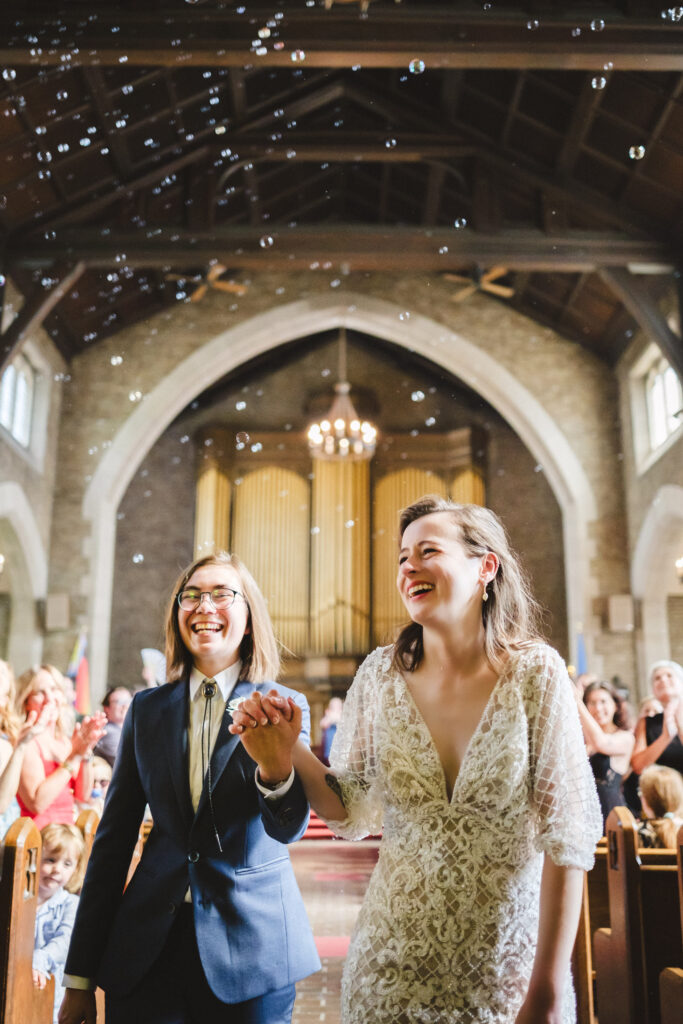
Photo by Jeffrey Lewis Bennett
Other LGBTQ+-Friendly Wedding Vendors
Photographers
- Liv Lyszyk, Grand Rapids, a queer photographer whose documentary-style work centers real, unposed moments and who maintains her own directory of queer-affirming Grand Rapids vendors
- Kari Paine, Detroit, a queer film photographer specializing in candid, documentary-style LGBTQ+ weddings and elopements
Officiants
- Ceremonies by Sabra, a professional officiant known for fully customized, LGBTQ+-affirming ceremonies
- Dutch Bingo Weddings, led by Jenny, a non-denominational Michigan officiant and visible LGBTQ+ community ally
- For the Love Weddings, a team of inclusive officiants specializing in heartfelt, LGBTQ+-affirming ceremonies
Florists
- HYSSOP Floral, artistic, nature-inspired floral design with an openly stated commitment to LGBTQ+ clients
- Bittersweet & Co., garden-inspired, sustainable floral design that affirms and welcomes LGBTQ+ couples
- Epsilon Floral, a Michigan floral studio built on sustainability and explicit inclusivity
Bridal and Attire
- Magnolia Bridal, custom and ready-to-wear gowns with an inclusive design philosophy for all kinds of love and expression
- Wed Company GR, Grand Rapids, an inclusive wedding wear studio offering gender-neutral and nontraditional styling options
Jewelers
- Dime & Regal, Grand Rapids, a jewelry studio praised for being LGBTQ+ friendly and community-driven
- Elaine B. Jewelry, Detroit-area, woman-owned with an explicit commitment to inclusivity regardless of gender or orientation
Hair and Makeup
- Mi Day Beauty, luxury wedding hair and makeup services across Michigan
- Lilith’s Lair, Grand Rapids, a queer-owned salon centering LGBTQ+ clients
- Alder Hair Co., a gender-affirming, LGBTQ+-inclusive salon
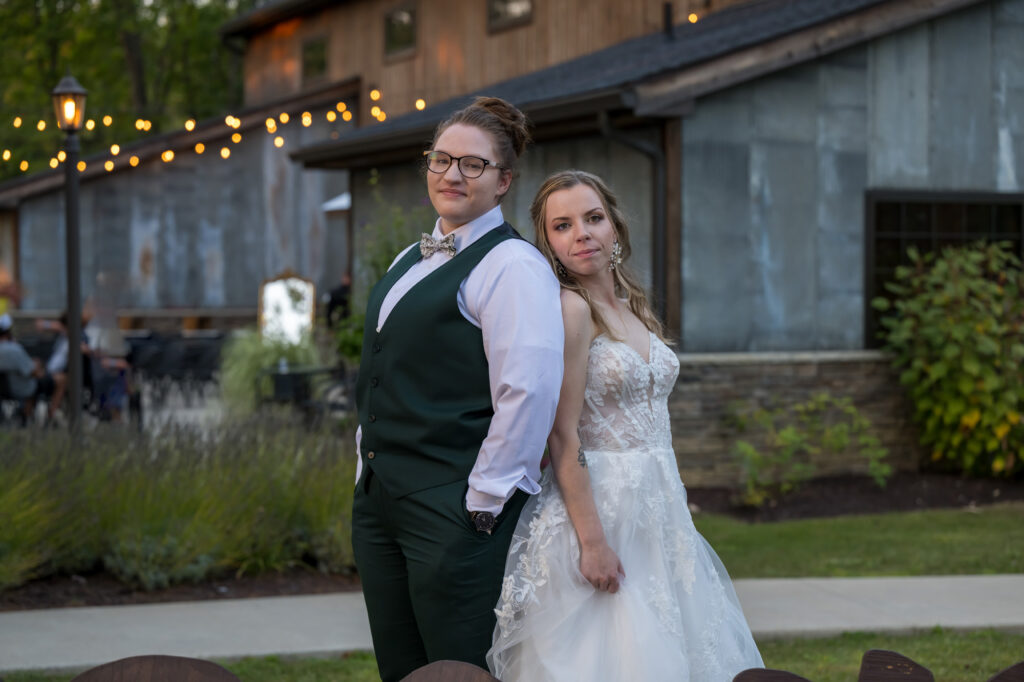
Photo by Double Exposure Photography
Choosing an Officiant
Your officiant sets the tone for your entire ceremony, so this is a vendor relationship worth being especially intentional about. Michigan allows ordained clergy, judges, mayors, and county clerks to perform legal marriages, along with anyone ordained through an online organization (such as the Universal Life Church), which opens the door to having a close friend or family member officiate if that feels right for you. If you’d rather work with a professional officiant, look specifically for one experienced with same-sex or LGBTQ+ ceremonies, since the right officiant will know how to write a ceremony that doesn’t awkwardly default to language or traditions built around a bride-and-groom framework.
Rethinking (or Keeping) Traditions
Wedding traditions were largely built around a specific, heteronormative template, and one of the more freeing parts of planning an LGBTQ+ wedding is deciding, deliberately, what to keep and what to leave behind.
Who walks whom, and how. Traditional processionals assume specific gendered roles. Many couples walk down the aisle together, choose a different order entirely, or have both partners walk with the family members who mean the most to them, whatever combination feels most true to your relationship.
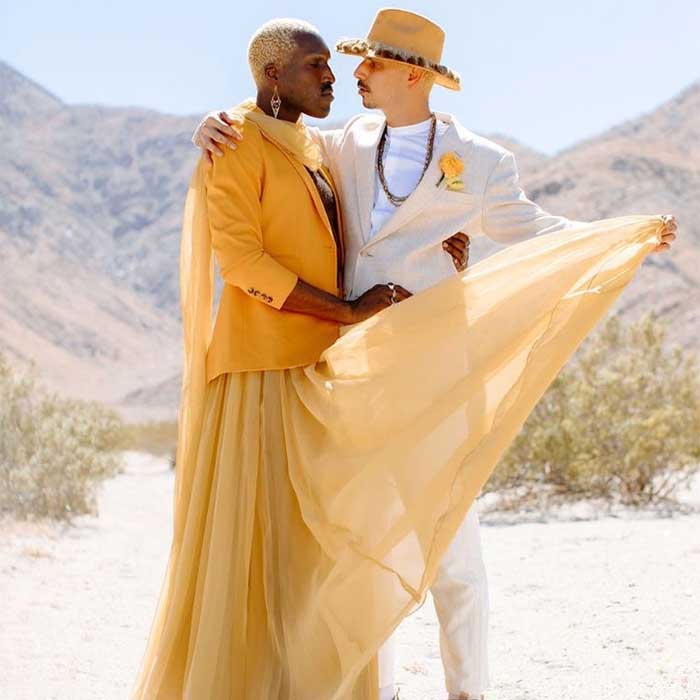
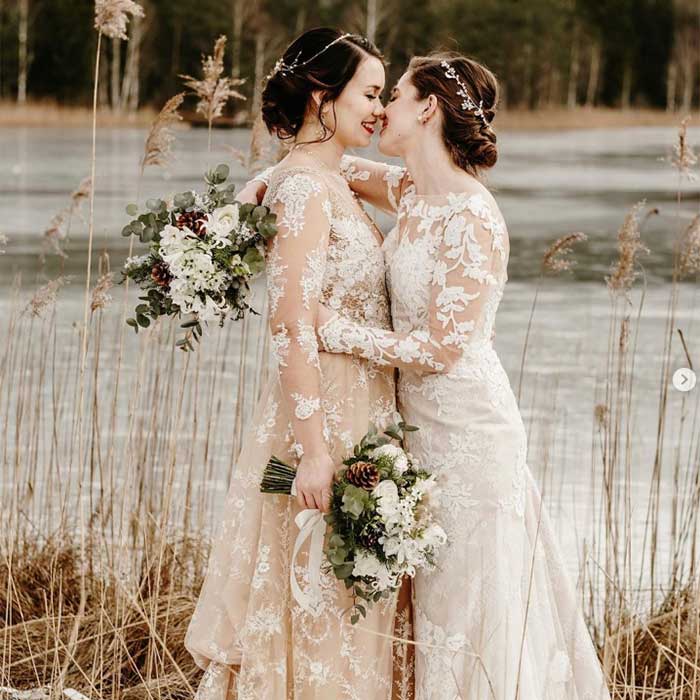
Attire. There’s no rule that says only one partner wears a gown or only one wears a suit. Two dresses, two suits, one of each, a jumpsuit, or something that blends traditional wedding fashion entirely are all increasingly common and beautifully documented across real weddings. Dress for how you want to feel walking into the room, not for a role assigned by tradition.
Titles and language. “Bride and groom,” “husband and wife,” and similar phrasing simply may not apply, and that’s completely fine to address directly with your officiant, DJ, and stationery designer ahead of time so introductions, toasts, and signage reflect how you actually want to be described.
Family traditions. Some couples fold in cultural or family rituals that matter to them, adapted as needed, while others build entirely new traditions from scratch. Neither approach is more “correct” than the other.
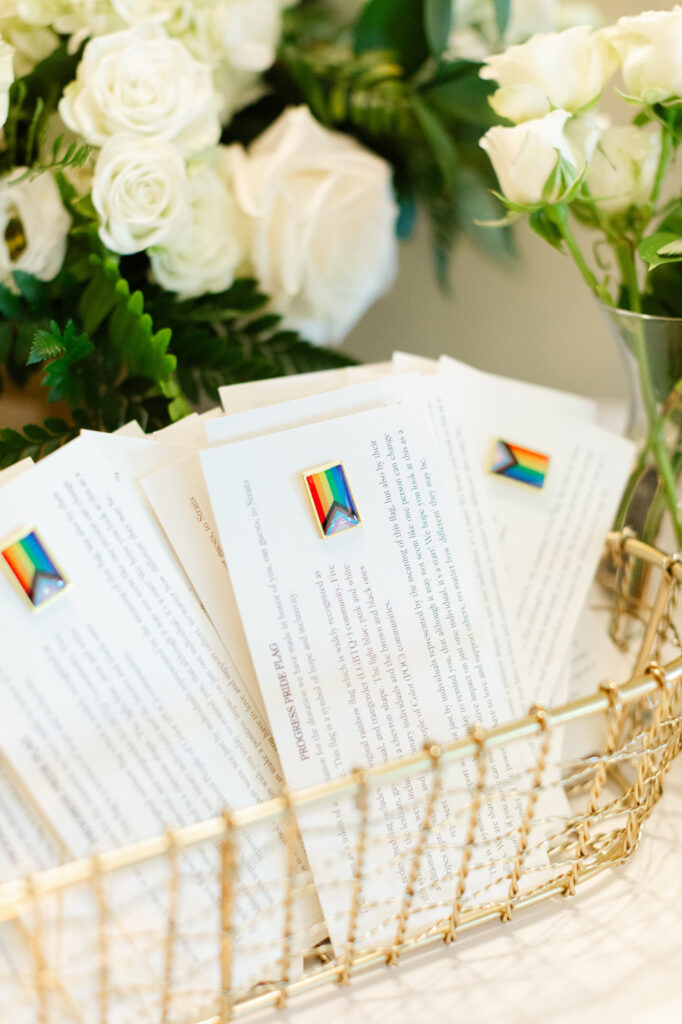
Photo by Lauren Wood Photography
Navigating Family Dynamics
Not every LGBTQ+ couple has the same family experience, and it’s worth planning with that reality in mind rather than assuming a picture-perfect, fully supportive guest list. If some family members are unsupportive, distant, or simply absent, it’s okay to build your guest list and your day around the people who do show up for you, chosen family included. Many couples find it helpful to designate a few trusted people (a wedding party member, a planner, or a close friend) as a point of contact for any day-of family tension, so it doesn’t fall on you or your partner to manage in the moment.
If you’re navigating a more complicated family situation and want additional support thinking through guest list decisions or difficult conversations, it can help to loop in a wedding planner early, many are well-versed in exactly this kind of sensitive, relationship-based planning.
Building Your Vendor Team
Beyond venue and officiant, the same inclusivity research applies to every other vendor on your list, photographers, florists, caterers, hair and makeup artists, and DJs. A few specific things worth asking hair and makeup artists in particular: whether they have experience with a range of gender expressions and styles, since this is one category where couples sometimes report feeling boxed into traditionally feminine or masculine looks regardless of what they actually want. The right artist will ask what you want first, rather than assuming.
When you’re ready to start building your team, Nearlywed’s Michigan wedding vendor directory covers every category, and reaching out directly with a quick, honest question about their experience with LGBTQ+ couples is always a reasonable and welcomed first step.
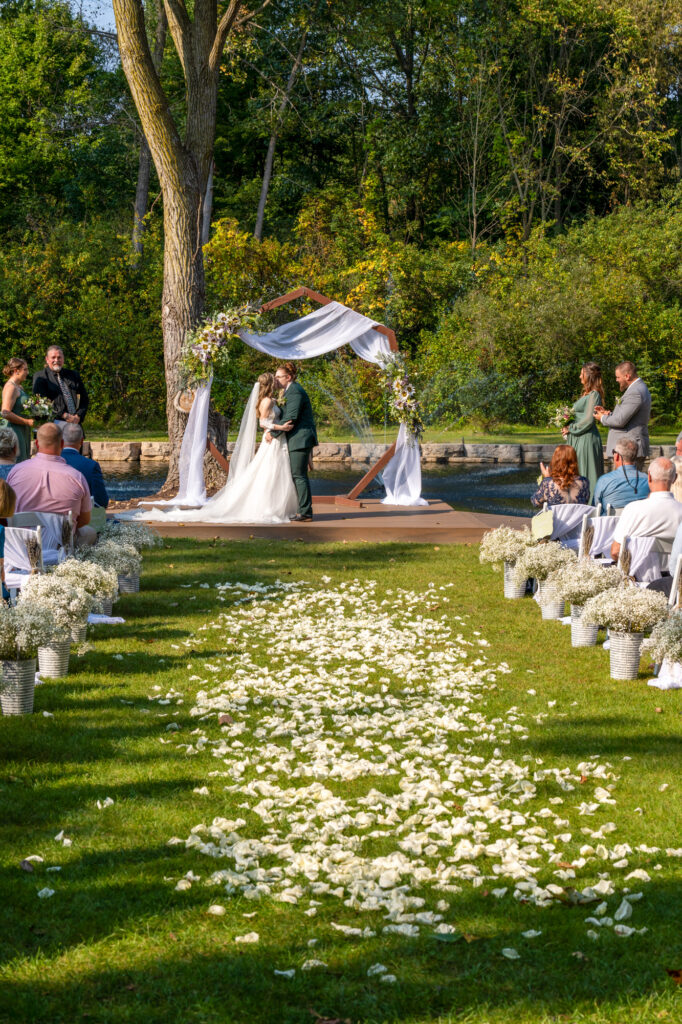
Photo by Double Exposure Photography
The Legal Basics in Michigan
Marriage equality has been the law of the land nationwide since the Supreme Court’s 2015 Obergefell v. Hodges decision, and Michigan issues marriage licenses to all couples regardless of gender under the same process. Both partners will need valid photo ID, and Michigan does not require a waiting period or blood test, so you can apply for your license and marry with real flexibility on timing. For the full step-by-step process, our guide to how to get a marriage license in Michigan walks through exactly what to bring and where to apply.
If you’re planning to change your name after the wedding, the process in Michigan is the same regardless of the couple’s makeup, though the paperwork can still feel like a lot to navigate. Our guide to changing your name in Michigan after getting married breaks down the full process step by step.
One practical note: legal landscapes can shift, and this is an area where staying current matters. If you have any specific legal questions or concerns, particularly around parental rights, name changes, or documentation for a couple with a more complex legal history, it’s worth a quick consultation with a family law attorney in your area to confirm nothing has changed closer to your date.
Frequently Asked Questions
Is same-sex marriage legal in Michigan? Yes. Marriage equality has been federal law nationwide since 2015, and Michigan issues marriage licenses to all couples under the same process regardless of gender.
How do we find LGBTQ+-friendly wedding vendors in Michigan? Look for vendors who explicitly state their inclusivity in their profiles or marketing, ask directly during your first inquiry, and check portfolios and reviews for a genuine range of couples represented in their past work.
Do we have to follow traditional wedding roles like “bride and groom”? Not at all. Many LGBTQ+ couples adapt or entirely reimagine traditional wedding language, processionals, and attire to reflect their own relationship, and a good officiant or planner will help you build a ceremony that fits you specifically.
What if our families aren’t fully supportive? It’s okay to build your guest list and your day around the people who genuinely support you, including chosen family. Consider designating a trusted point person to manage any family tension on the day itself so it isn’t left to you or your partner.
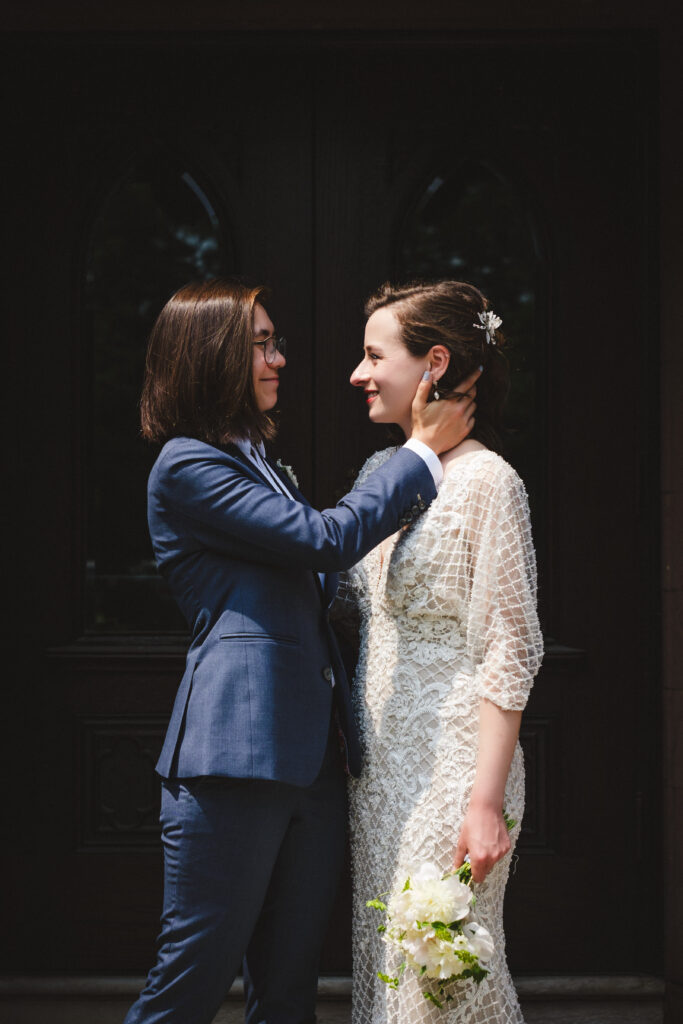
Photo by Jeffrey Lewis Bennett
The best wedding advice for any couple, LGBTQ+ or otherwise, is the same: build a day that reflects your relationship, not a template. Michigan has a growing, genuinely welcoming wedding industry ready to help you do exactly that.
When you’re ready to start building your vendor team, browse Nearlywed’s Michigan wedding venue directory and vendor directory to find the pros who’ll help bring your day to life.
you might also like
Check Out The Latest on Instagram
Check Out The Latest on Instagram
Follow us on Facebook and Instagram for more tips, resources, and inspiration!