Tips For Coordinating A Wedding Hotel Block for Your Guests
If you have guests traveling in for your wedding, a hotel block is one of the most genuinely helpful things you can offer them. It takes the guesswork out of where to stay, often comes with a discounted group rate, and keeps your out-of-town crowd conveniently close to each other (and to you) for the whole weekend. It’s also one of those planning tasks that feels intimidating until you actually do it, at which point it’s refreshingly simple. Here’s exactly how to book a wedding hotel block, what it costs, and how to make sure your guests actually use it.

Photo by The House on The Clouds
What Is a Wedding Hotel Block, Exactly?
A hotel block is a set number of rooms a hotel reserves specifically for your wedding guests, usually at a discounted group rate, for a specific range of dates. Guests book directly with the hotel, either through a dedicated booking link or by mentioning your wedding’s group code over the phone, and the hotel manages availability from the block you’ve reserved. You’re not personally paying for these rooms (unless you choose to), you’re simply securing a set number of rooms at a set price so your guests have an easy, guaranteed place to stay.
How Many Hotels Should You Book a Block At?
Most couples book a block at one primary hotel near their venue, plus sometimes a second option at a different price point to give guests more flexibility. If your venue is in a smaller town with limited hotel inventory, one block may be your only real option anyway. If you’re marrying in a larger city or resort area, offering both an upscale and a budget-friendly block gives guests genuine choice without you having to manage more than two relationships.
Photo by Alena Kostromina
How to Book a Wedding Hotel Block: Step by Step
1. Estimate your out-of-town guest count. You don’t need an exact number this early, but a rough estimate (25 rooms versus 75 rooms) helps hotels quote you accurately and helps you avoid over- or under-committing.
2. Research hotels near your venue. Prioritize proximity to your ceremony and reception, and consider whether guests will need transportation between the hotel and venue. Read recent reviews, and if possible, tour in person or request photos of standard rooms before committing.
3. Contact the hotel’s sales or group booking department. This is usually a different team than the front desk, so ask specifically for group sales or event booking. Provide your wedding date, estimated room count, and the range of dates you need blocked (often the Thursday or Friday through the Sunday of your wedding weekend).
4. Negotiate your rate and block terms. Hotels are often willing to negotiate on rate, a complimentary room for every certain number booked, a discount on your own room, or amenities like a welcome reception space. Don’t be afraid to ask, and consider getting quotes from two or three properties before committing.
5. Understand the contract before signing. Pay close attention to your attrition rate (the percentage of the block you’re required to fill or pay for even if unbooked), your cutoff date (when unbooked rooms release back to general inventory), and whether you’re personally liable for any unbooked rooms. Most blocks require you to fill 70 to 85 percent of reserved rooms to avoid a penalty, so don’t over-block based on your total guest list; base it on your realistic out-of-town count.
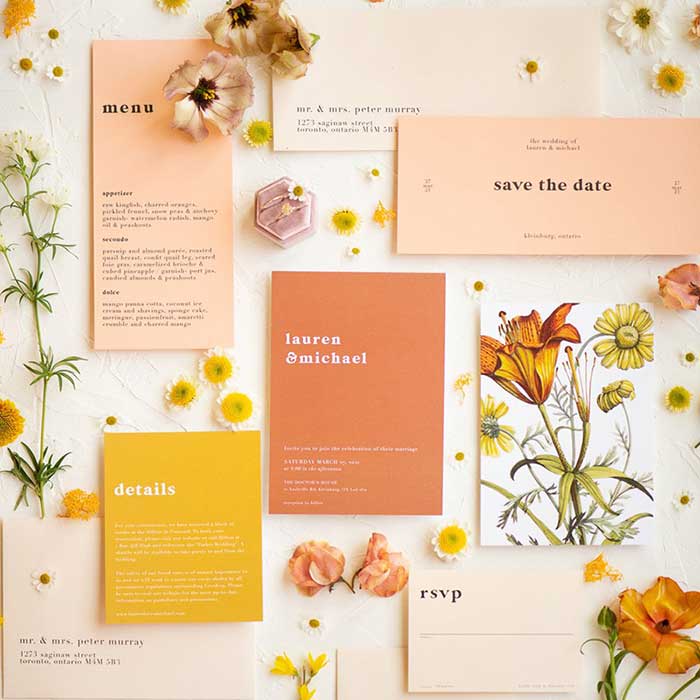
6. Get your booking link or group code. Once your contract is signed, the hotel will provide a booking link or code to share with guests, either through your wedding website, invitation insert cards, or both.
Photo by Veil of Grace Photography
What Does a Wedding Hotel Block Cost?
In most cases, a hotel block costs the couple nothing directly, guests pay their own discounted room rate, and you’re simply securing the block itself. Some hotels do require a minimum room commitment or a small deposit to hold the block, particularly during peak wedding season or in high-demand markets, so ask about this upfront. If you want to cover costs on your guests’ behalf, whether that’s the wedding party’s rooms or a subsidized rate for all guests, that’s entirely optional and worth budgeting for separately if it’s something you want to offer.
How to Get Guests to Actually Book Within Your Block
Booking a block is only half the job, filling it is the other half. A few tips that help: share the booking link and group code clearly and repeatedly, on your wedding website, in your invitation, and again in any reminder communications. Explain the value plainly (“we’ve secured a discounted rate and it’s the closest hotel to the venue”) so guests understand why booking within the block benefits them. Set a friendly reminder a few weeks before your cutoff date, since many guests wait until the last minute and blocks can release back to general inventory (often at a higher rate) after the deadline passes. If your block isn’t filling, don’t panic, hotels typically allow you to release excess rooms without penalty as long as you communicate before the cutoff date.
Photo by Heather Jowett Photography
Frequently Asked Questions
Do couples have to pay for a wedding hotel block? Generally no. Guests pay their own discounted room rate directly to the hotel. Some contracts include a minimum room requirement (attrition), which could mean a fee if too few rooms are booked, so read your contract carefully.
How far in advance should you book a wedding hotel block? Aim to secure your block 9 to 12 months before your wedding, especially for weddings during peak season or in high-demand destinations, so you have the best selection of hotels and negotiating leverage.
What happens if a wedding hotel block doesn’t fill up? Most contracts include an attrition clause specifying the minimum percentage of the block that must be booked. If you don’t expect to fill it, contact the hotel before your cutoff date to release unneeded rooms and avoid any penalty.
Should you book more than one hotel block? It’s common to offer a primary block near the venue plus a second option at a different price point, especially for larger weddings or destinations with a wide range of guest budgets.
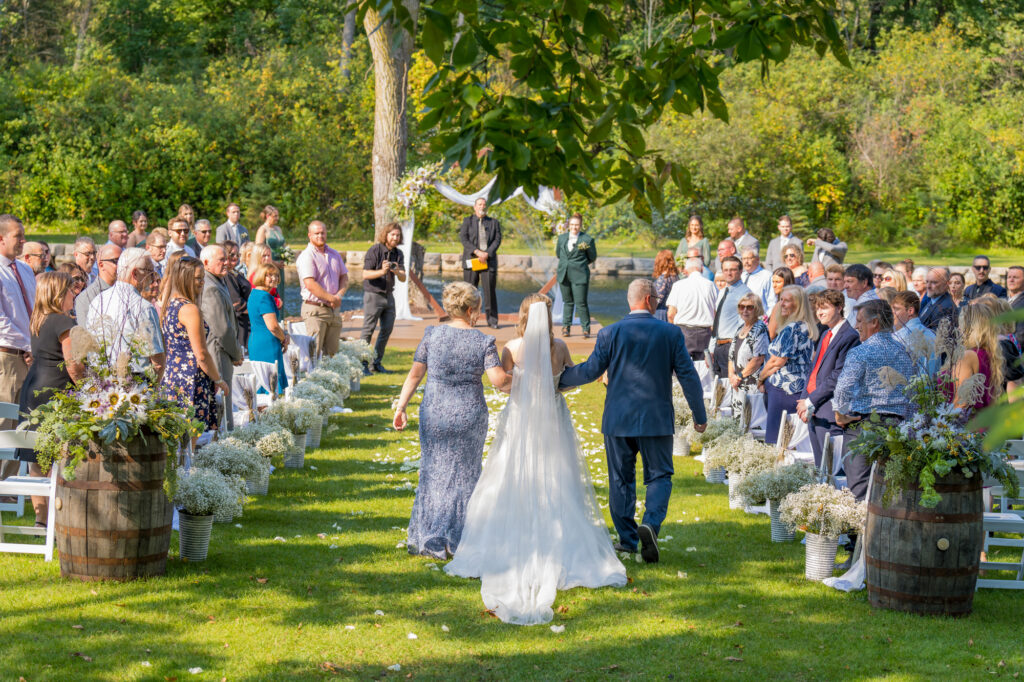
Photo by Double Exposure Photography
A well-planned hotel block is a small logistical detail that makes a real difference in how smooth your wedding weekend feels for everyone traveling in. Book early, read your contract closely, and share the details often so guests actually take advantage of it.
For more on planning a smooth wedding weekend for out-of-town guests, check out our guide to planning the perfect destination wedding weekend, and when you’re ready to book the rest of your vendor team, browse Nearlywed’s Michigan wedding vendor directory.
you might also like
Check Out The Latest on Instagram
Check Out The Latest on Instagram
Follow us on Facebook and Instagram for more tips, resources, and inspiration!