The Anatomy of Wedding Dresses
Finding your wedding dress is one of the most exciting parts of the planning process—but it can also feel overwhelming if you don’t know the terminology. From necklines and silhouettes to trains and fabrics, understanding the anatomy of a wedding dress will help you shop with confidence and communicate exactly what you’re looking for.
Whether you’re envisioning something timeless and romantic or modern and fashion-forward, this guide breaks down every element of a wedding dress so you can find “the one” with ease.
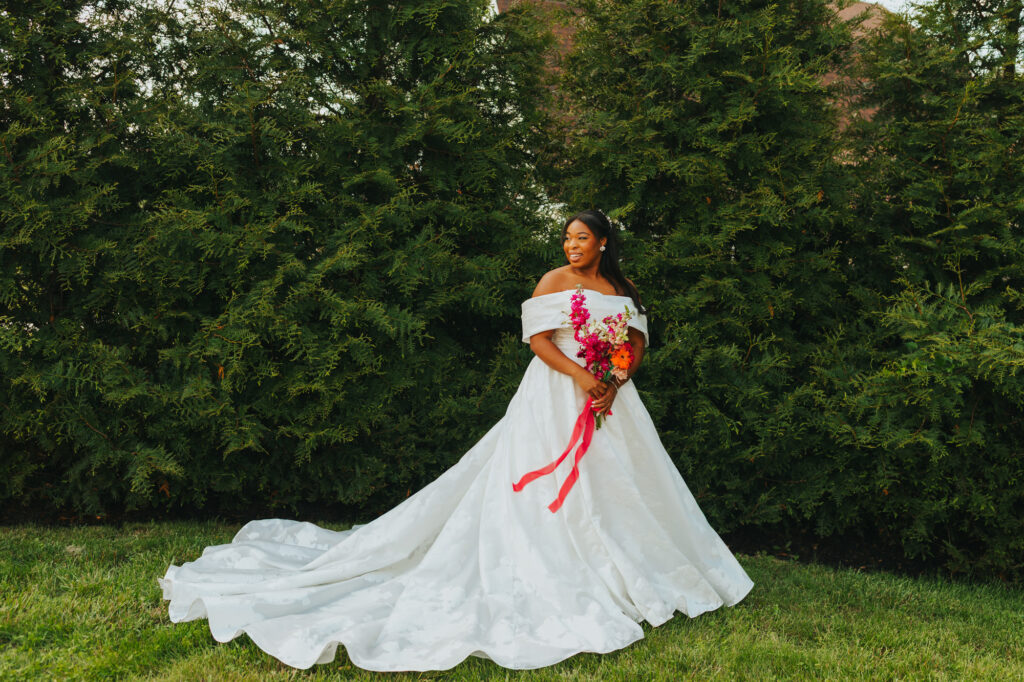
Photo by Savannah Faith Photography
The Anatomy of a Wedding Dress
The Silhouette
The silhouette is the foundation of your wedding dress—it defines the overall shape and how the gown fits your body. Choosing your silhouette often comes down to how you want to feel—romantic, structured, effortless, or bold.
The most common silhouettes include:
A-Line: Universally flattering, this style gently flares from the waist and works well for nearly every body type.
Ball Gown: A dramatic, princess-style dress with a fitted bodice and full skirt.
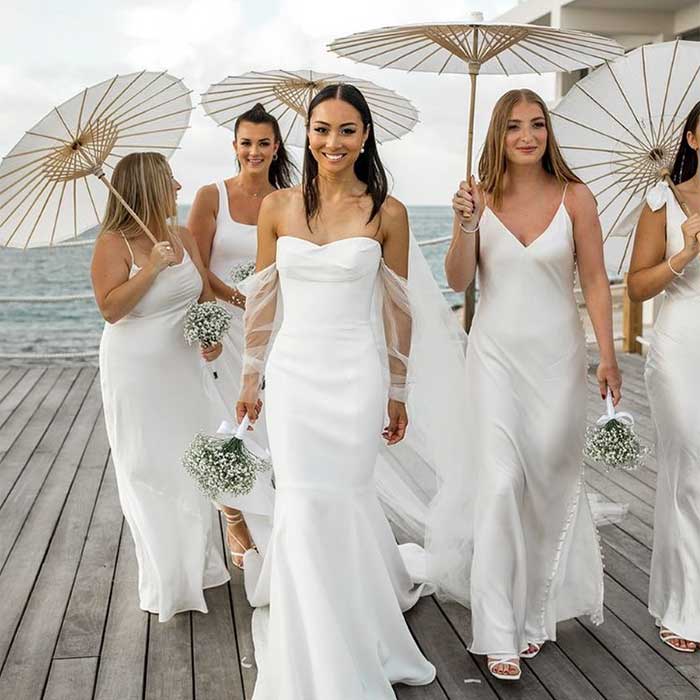
Mermaid/Trumpet: Fitted through the bodice and hips, flaring out at or below the knee for a more dramatic look.
Sheath/Column: A slim, straight silhouette that skims the body for a minimalist and modern feel.
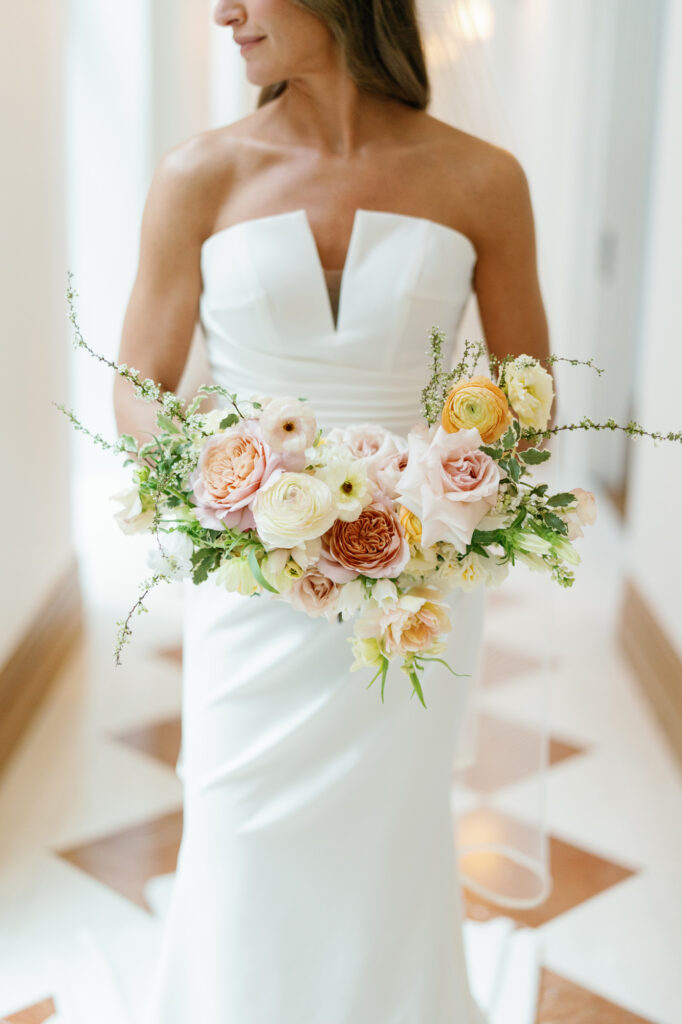
Photo by Shanell Photography
The Bodice
The bodice is the upper portion of the dress and plays a major role in both fit and design. It includes everything from the neckline to the waistline and provides support and shape. A well-fitted bodice is essential, not just for comfort, but for how the entire dress sits and moves.
Some key bodice features include:
Corsetry & Boning: Adds structure and enhances your natural shape.
Built-In Cups: Offers support without needing additional undergarments.
Illusion Panels: Sheer fabric with lace or beading for a delicate, barely-there look.

Photo by Patty Leonor Photo
Necklines
The neckline frames your face, décolletage, and overall vibe. Your neckline choice can dramatically influence the feel of your dress—from classic to cutting-edge.
Popular options include:
Sweetheart: Romantic and curved, mimicking the shape of a heart.
V-Neck: Elongating and elegant, great for a modern silhouette.
Off-the-Shoulder: Soft and feminine, highlighting the shoulders.
Square Neck: Clean and structured, perfect for a contemporary look.
High Neck/Halter: Chic and fashion-forward with added coverage.
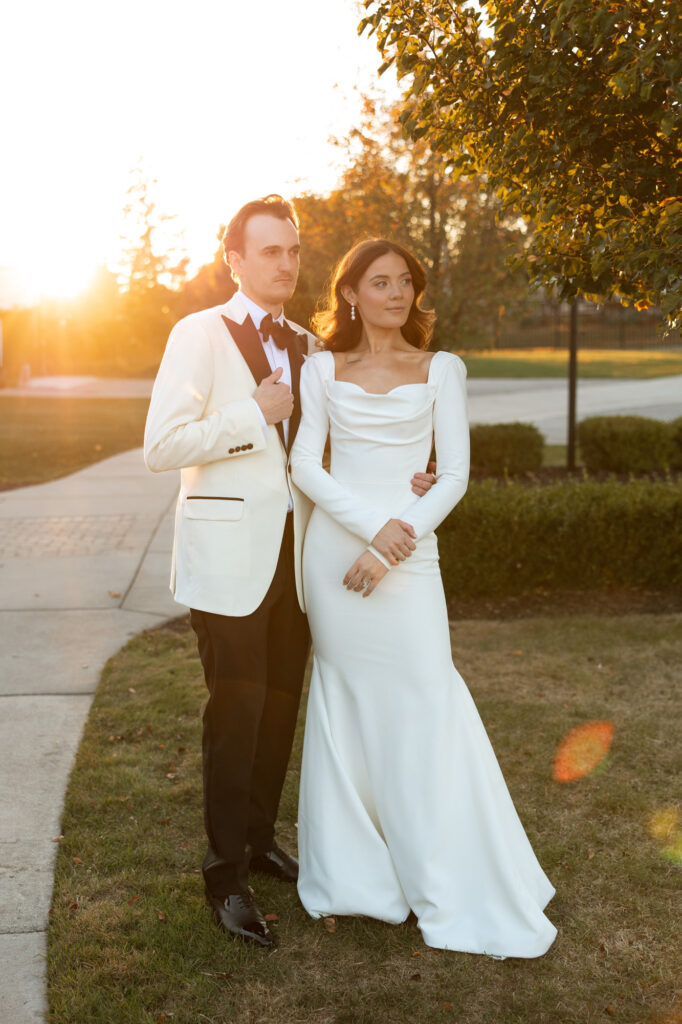
Photo by Andi B Photography
Sleeves & Straps
Sleeves and straps not only add style but also affect comfort and seasonality.
Options range from:
Strapless: Clean and classic.
Spaghetti Straps: Delicate and minimal.
Cap Sleeves: Subtle coverage with a romantic feel.
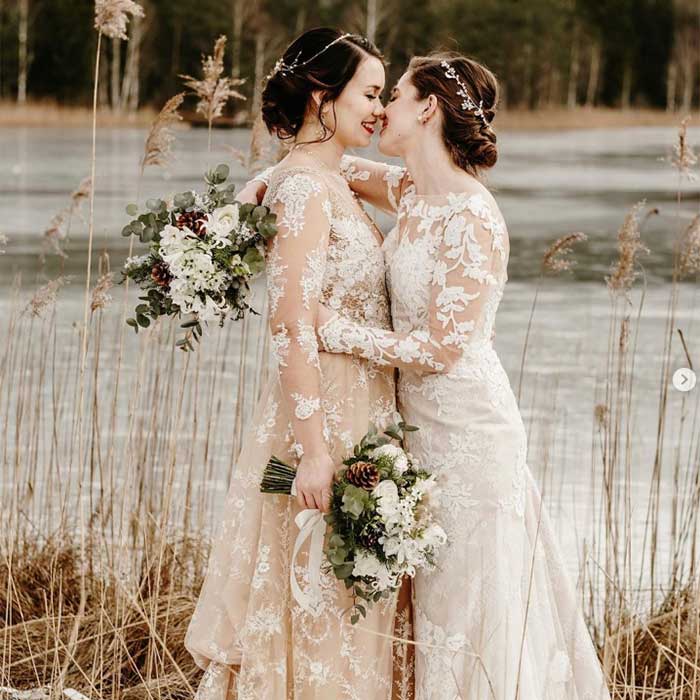
Long Sleeves: Elegant and timeless, often seen in lace designs.
Detachable Sleeves: A versatile option that allows for multiple looks throughout the day.

Photo by Juliana Aragon Photography
The Waistline
The waistline is where the bodice meets the skirt, and it plays a key role in shaping your silhouette.
Natural Waist: Sits at your natural waistline for a balanced look.
Empire Waist: Positioned just below the bust, creating a soft, flowy feel.
Drop Waist: Extends below the natural waist for a lengthened torso.
Basque Waist: A V-shaped waistline that adds a regal, structured touch.

Photo by Jean Smith Photography
The Skirt
The skirt brings the drama and defines how your dress moves. Your skirt choice will impact everything from your walk down the aisle to your first dance.
Some key elements include:
Volume: From sleek and fitted to full and layered.
Slits: A modern detail that adds movement and a hint of edge.
Layers & Textures: Tulle, organza, and satin all create different effects.

Photo by Molly Grunewald Company
The Train
The train is the extended fabric that trails behind your dress—and it’s one of the most dramatic features. Most dresses include a bustle option so you can easily move around during the reception.
Common types include:
Sweep Train: Subtle and easy to manage.
Chapel Train: A popular medium-length option.
Cathedral Train: Long and dramatic for a grand entrance.
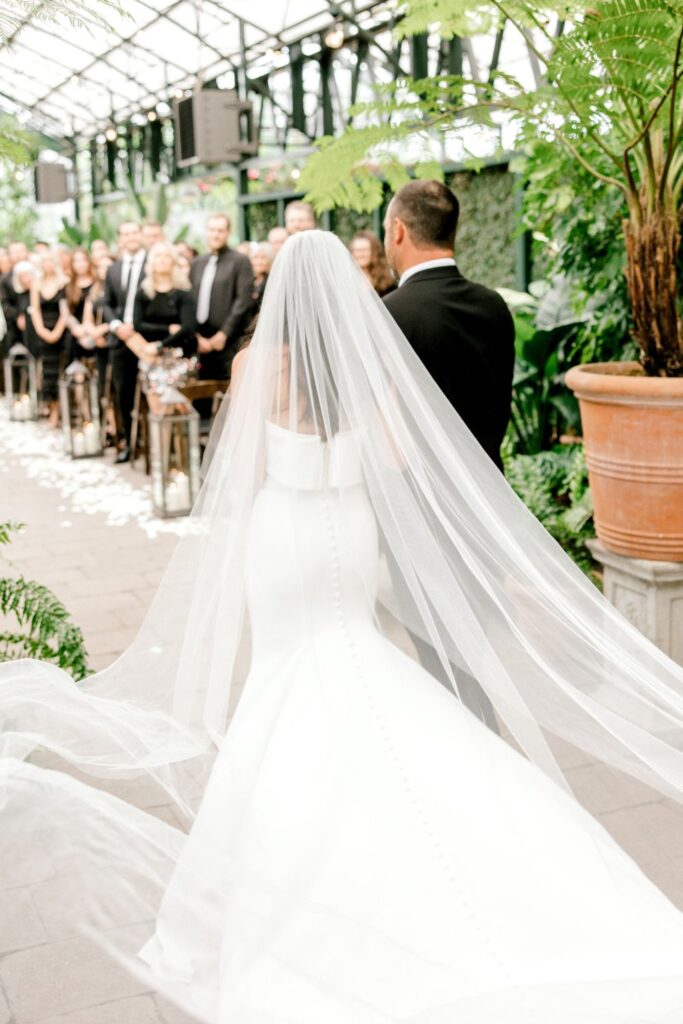
Photo by Laurenda Marie Photography
Fabrics & Details
Fabric can completely transform the look and feel of a dress.
Lace: Romantic and timeless.
Satin: Smooth, structured, and classic.
Tulle: Light and airy for a dreamy effect.
Chiffon: Soft and flowy, perfect for destination weddings.
Details like beading, embroidery, appliqué, and buttons add personality and dimension.
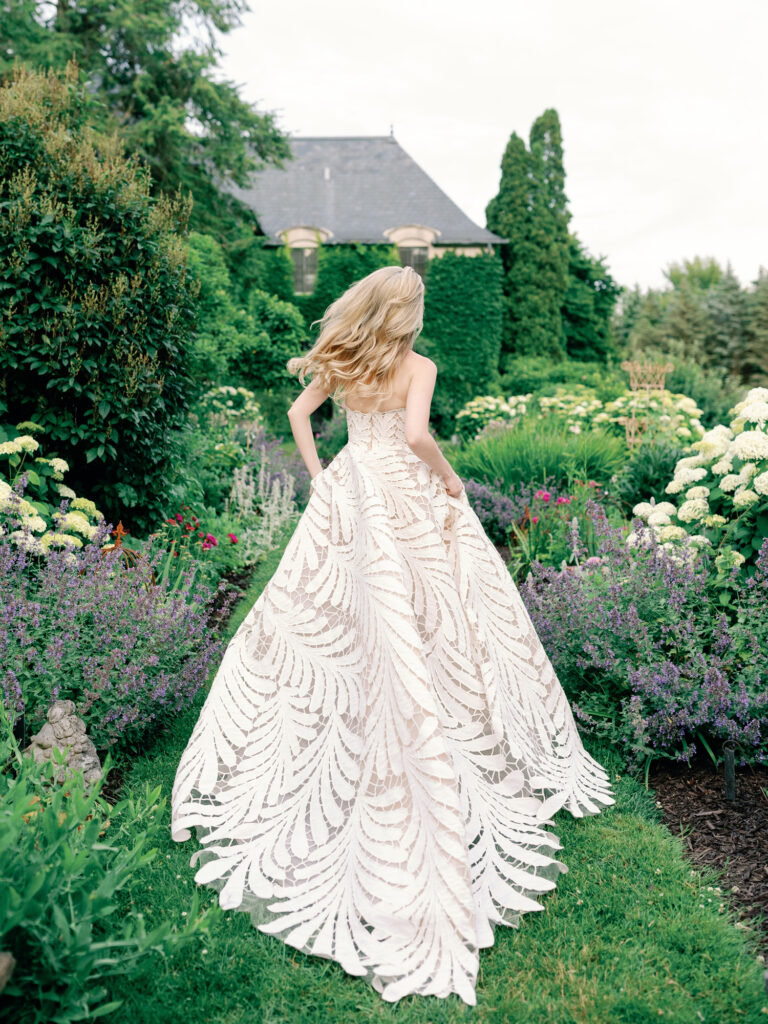
Photo by The Fourniers
Understanding the anatomy of a wedding dress makes the entire shopping experience more enjoyable—and far less overwhelming. When you know the difference between silhouettes, necklines, and fabrics, you can walk into your bridal appointment with clarity and confidence.
At the end of the day, the perfect dress isn’t just about trends or terminology—it’s about how it makes you feel. Whether that’s effortlessly elegant, boldly modern, or completely romantic, knowing the building blocks of a gown will help you find a dress that feels uniquely yours.
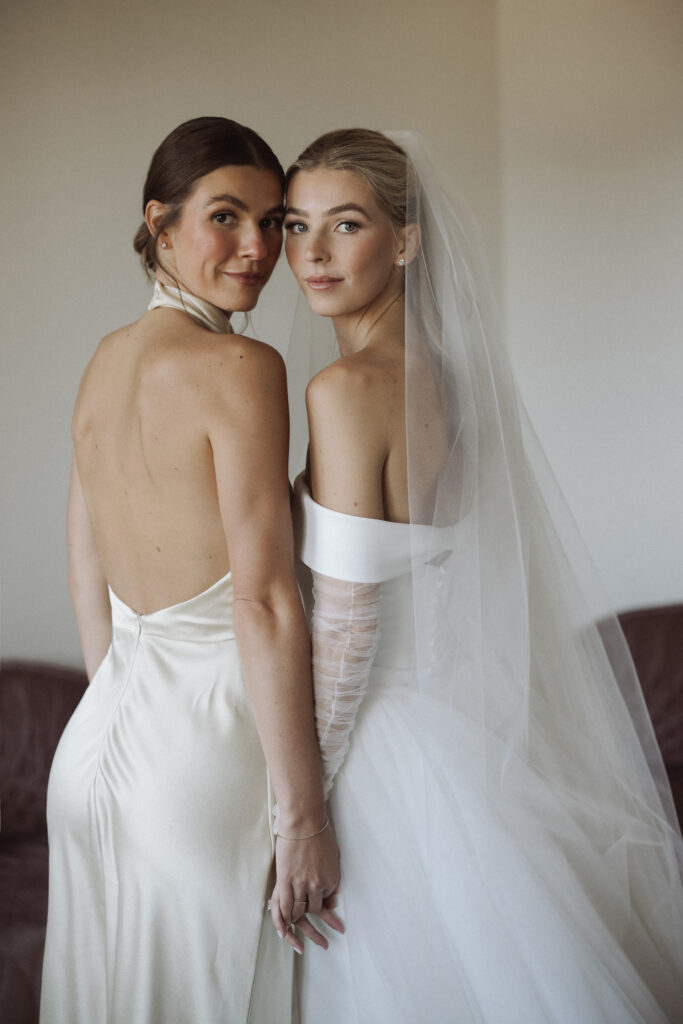
Photo by Blaine Siesser Photography
you might also like
Check Out The Latest on Instagram
Check Out The Latest on Instagram
Follow us on Facebook and Instagram for more tips, resources, and inspiration!