Live Band vs. DJ for Your Wedding Reception
The dance floor is where your wedding turns from a lovely event into an unforgettable party. Grandma is twirling, your college friends are belting out the chorus, and the whole room is glowing. And whether that magic comes from a live band or a DJ is one of the biggest entertainment decisions you’ll make.
Both can absolutely deliver an amazing night. The right choice comes down to your budget, your venue, your guest list, and the vibe you’re dreaming of. Here’s a breakdown of live band vs. DJ for your wedding reception, with costs, pros and cons, and a few tips to help you decide.
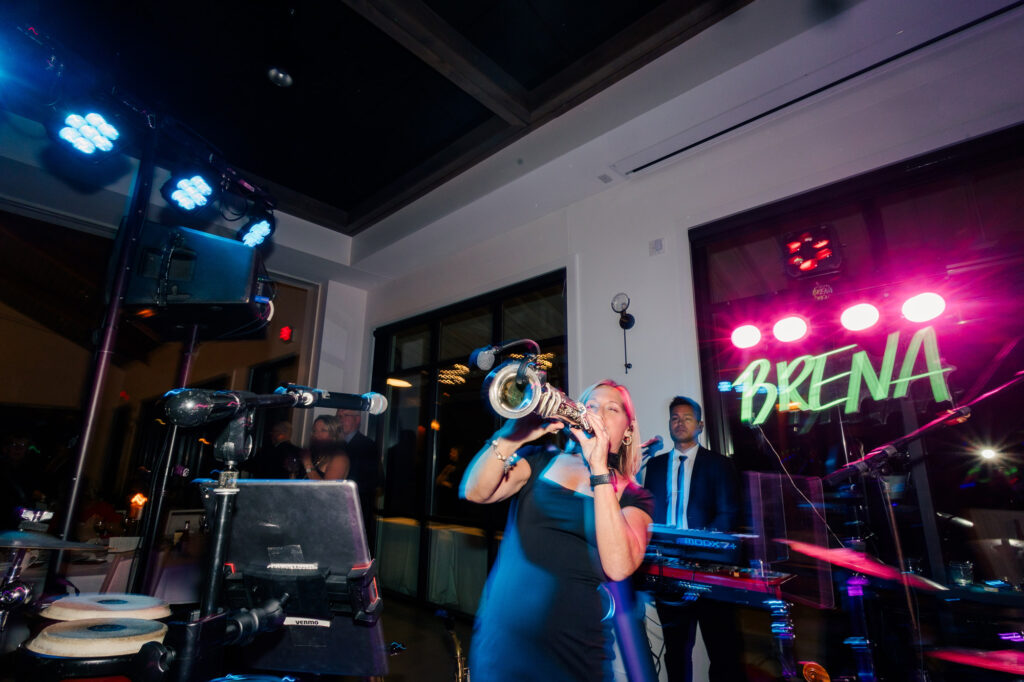
Photo by Chrystin Melanie Photography
What Does Each Option Cost?
Let’s start with the numbers. According to The Knot’s Real Weddings Study, the average live wedding band costs about $4,500, while the average wedding DJ costs about $1,800. That makes a band roughly two to three times the price of a DJ, mostly because you’re paying for several musicians instead of one entertainer. Prices vary by region, date, and how many hours you book, so treat these as a starting point. Use our free wedding budget planner to see how entertainment fits into your total plan.
Cost also climbs with the guest list. The Knot’s data shows these averages by guest count:
- 1 to 50 guests: about $1,600 for a band and $1,200 for a DJ
- 51 to 100 guests: about $3,000 for a band and $1,600 for a DJ
- 101 or more guests: about $5,400 for a band and $1,900 for a DJ
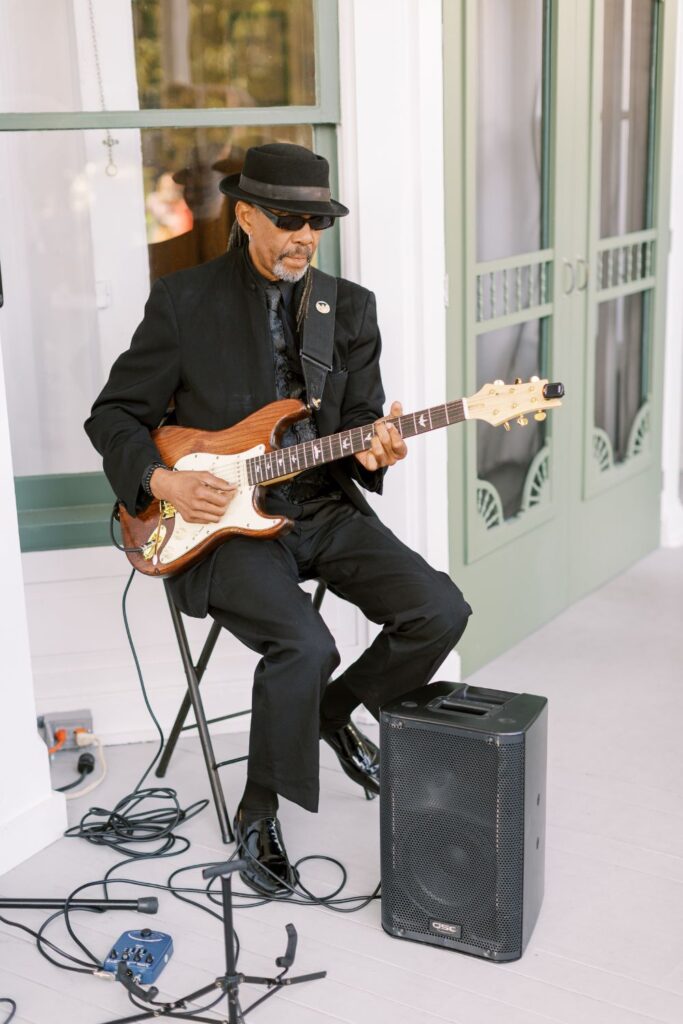
Photo by Ashley Slater Photography
The Case for a Wedding DJ
A DJ is by far the more popular choice, and it’s easy to see why. About 71 percent of couples hire one, according to The Knot, compared with about 12 percent who book a live band.
The biggest draw is song choice. A DJ can play virtually any song from any decade, in the original recording, so if your crowd wants Motown, then hip-hop, then a country singalong, a DJ can handle it in a single set. A DJ also typically costs far less than a band, which frees up money for photography, florals, or your honeymoon. DJs need less space than a full band too, which is a big help in smaller or unusual venues, and many also serve as your emcee, making announcements and keeping the timeline moving. Plenty of DJs offer easy extras like uplighting, ceremony sound, and photo booths, and our guide to mood lighting for your wedding reception shows how lighting and music work together.
The tradeoff is that a DJ doesn’t bring the same live, in-the-moment energy as musicians on stage, and the experience depends heavily on the DJ’s personality and crowd-reading skills.

Photo by Bash DJs
The Case for a Live Wedding Band
If you want your reception to feel like a concert, a live band is hard to beat.
The magic is in the energy. Live musicians feed off the crowd, and a great band interacts with guests, extends a favorite song, and turns a dance floor into a show. A live band is also a true statement, and guests tend to remember the sax solo, the horn section, or the lead singer working the room. Many bands will learn a song for your first dance or tailor a set to your tastes, and some offer different group sizes, from trios to full ensembles. Live music is great for dinner and cocktail hour too, since acoustic sets, jazz combos, and string players can create a beautiful atmosphere before the dance party starts.
The tradeoffs are that bands cost more, need more space for the stage and equipment, and have a more limited song list. Remember that musicians also take breaks, so ask how the band handles music between sets.
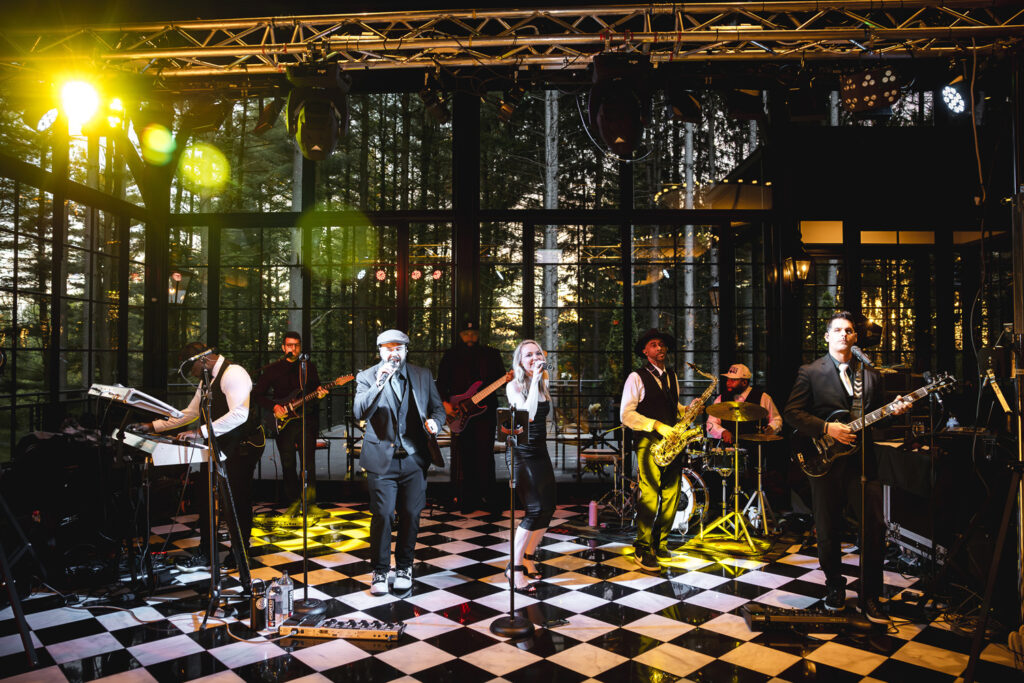
Photo by Rosy & Shaun Weddings
Quick Comparison
- Cost: DJs win. A DJ averages about $1,800, versus about $4,500 for a band.
- Song variety: DJs win. A DJ can play almost anything in its original form.
- Energy and wow factor: Bands win. Live performance is hard to match.
- Space needed: DJs win. A DJ takes up far less room.
- Atmosphere for ceremony and cocktails: Bands (or a live soloist or duo) often have the edge.
- Ease of planning: DJs are typically simpler, with fewer people and less equipment to coordinate.
Can’t Decide? Do Both!
You don’t have to pick just one. About 18 percent of couples combine the two, according to data from The Knot cited by Paperlust. A popular setup is a live band or acoustic duo for the ceremony, cocktail hour, and dinner, followed by a DJ to keep the dance floor packed late into the night. Another idea is to book a DJ for the whole evening and add a live musician, such as a violinist, saxophonist, or singer, who plays with the DJ for special moments.
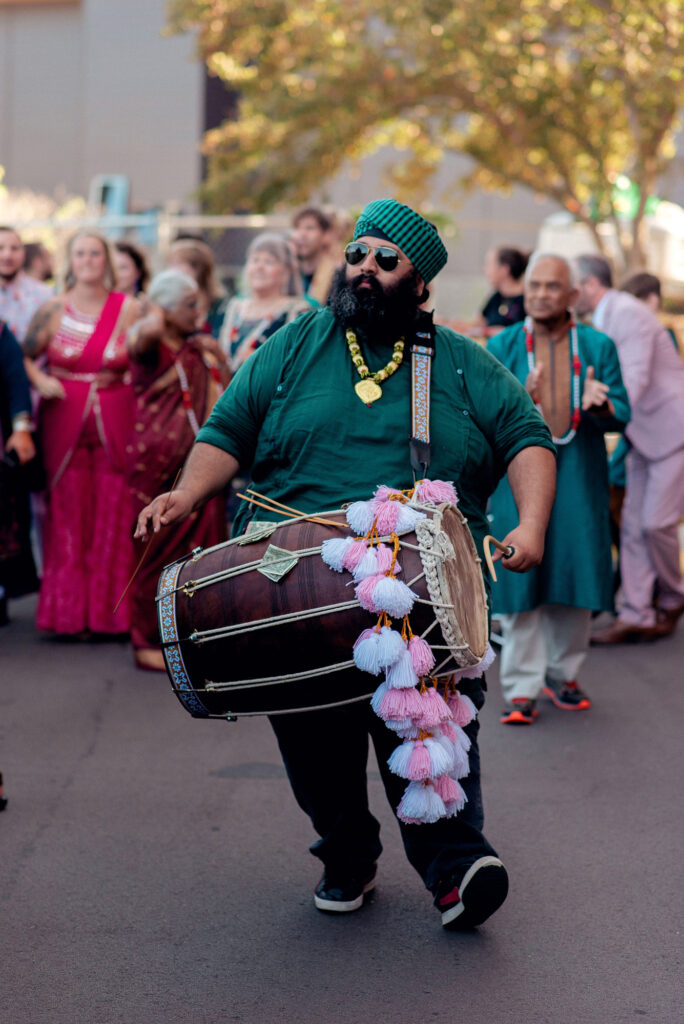
Photo by Erin Schmidt Photography
How to Choose: 6 Questions to Ask Yourselves
What’s our budget? Decide how much you can comfortably spend on entertainment first, then explore which options fit.
How big is the guest list? Larger groups often benefit from a band’s big sound, while smaller gatherings may prefer a DJ’s flexibility.
What’s our venue like? Check the space, the stage area, and any sound restrictions. Some venues limit amplified music or have rules about volume and end times.
What kind of music do we love? If your tastes are all over the map, a DJ may be easier. If you love one genre, such as Motown, jazz, or country, a specialized band could be perfect.
What’s the vibe? Think about whether you picture a polished concert or a flexible dance party.
Who’s our crowd? Consider your guests’ ages and tastes. A mixed-age crowd often loves the variety of a DJ, while a band can win over everyone with classics.
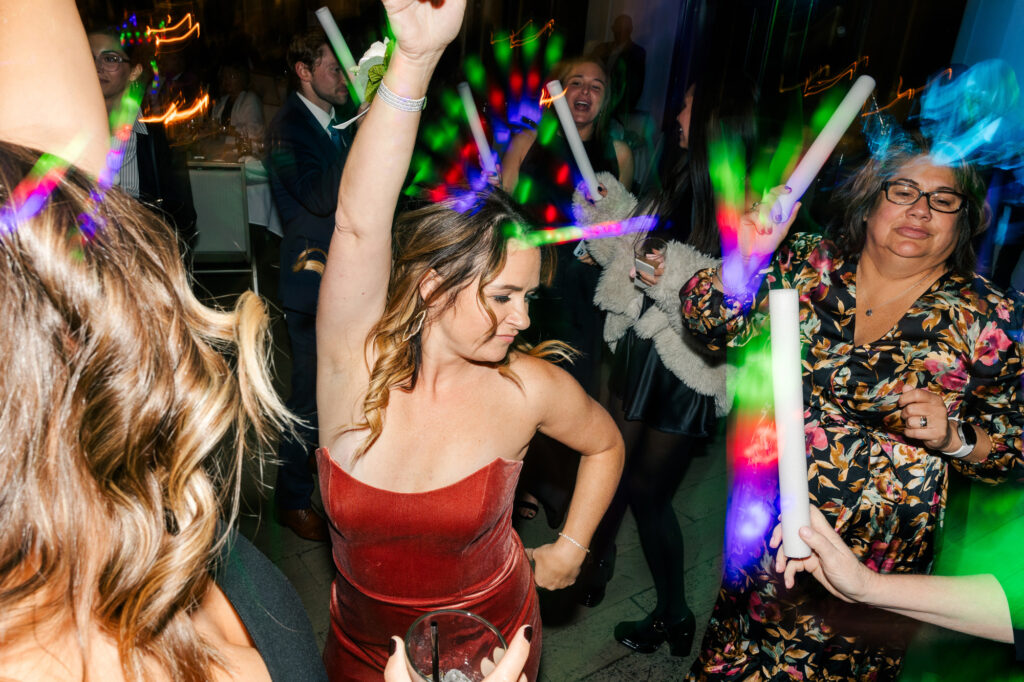
Photo by Chrystin Melanie Photography
Tips for Hiring Your Wedding Music Pros
- Book early: Popular DJs and bands fill up fast, especially for Saturdays in peak season.
- See them in action: Ask for video clips of a past wedding, or see a performance live if possible.
- Meet and talk: Chat about your must-play and do-not-play lists, your timeline, and how they’ll handle announcements and requests.
- Ask what’s included: Confirm hours, setup and teardown, sound equipment, lighting, overtime fees, and travel costs.
- Get it in writing: Make sure your contract covers the date, hours, backup plans, and what happens if someone is sick.
- Check the venue rulesL Ask about power access, load-in times, sound limits, and any preferred vendor lists.
Find the Perfect Soundtrack for Your Night
Whether you choose a DJ who can play every song on your list or a band that brings the roof down, the best entertainment is the one that gets your guests dancing and makes you smile. Think about your budget, your venue, and the party you want, and don’t be afraid to mix the two.
Ready to find your DJ or band? Browse Nearlywed’s Michigan wedding vendor directory to find musicians and entertainers, and explore our Michigan wedding venue directory to find a venue with the perfect dance floor.
Sources: The Knot, average wedding band and DJ cost; Paperlust, wedding DJ cost guide
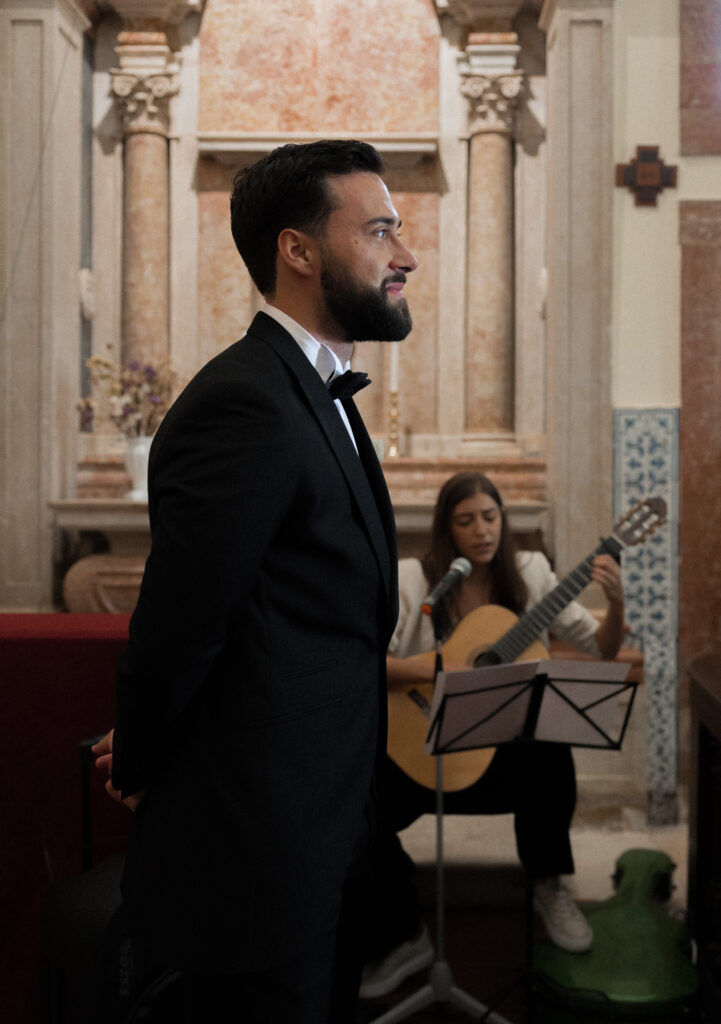
Photo by The Lopes Photography
Frequently Asked Questions
Is a band or a DJ better for a wedding?
Neither is better across the board. A DJ is more affordable and versatile, while a band brings live energy and a show-stopping feel. The best choice depends on your budget, venue, and style.
How much more does a live band cost than a DJ?
According to The Knot’s Real Weddings Study, the average band costs about $4,500 versus about $1,800 for a DJ, so a band often runs two to three times as much.
Can we have both a band and a DJ?
Absolutely. Many couples hire a live band for the ceremony or dinner and a DJ for dancing, or add a live musician to a DJ set.
How far in advance should we book?
Many couples book 9 to 12 months out, and earlier for peak-season Saturdays. Popular local acts can book up even sooner.
How many hours of music do we need?
Most receptions need about four to five hours of music, depending on your timeline. Your DJ or band can help you plan around dinner, toasts, and dances.
you might also like
Check Out The Latest on Instagram
Check Out The Latest on Instagram
Follow us on Facebook and Instagram for more tips, resources, and inspiration!