
How to Split Costs on a Bachelorette Trip (Without the Awkwardness)
Bachelorette trips are supposed to be about celebrating the bride, but nothing sours a group chat faster than confusion over money. Who covers the bride? Do you split the Airbnb evenly if someone gets the pullout couch? What happens when one bridesmaid wants a spa day and another is quietly stressing about her credit card balance?
The good news: with a little upfront planning and honest communication, splitting bachelorette costs can be simple, fair, and drama-free! In this guide, we’re breaking down exactly who pays for what, the best ways to divide expenses, our favorite money-splitting tools, and, most importantly, how to plan a trip everyone can afford, even when budgets vary widely across the group.

Who Pays for What on a Bachelorette Trip?
Modern etiquette is refreshingly clear on the big question: the guests split the bride’s share. The bride typically doesn’t pay for her own accommodations, group meals, or planned activities, and her portion is divided evenly among the attendees. The bride usually does cover her own travel to the destination (like her flight), plus any personal spending, though even that varies by group.
Everything else follows a simple rule: guests pay their own way. Each attendee covers her own travel, her share of lodging, her own meals and drinks, and her portion of group activities. The maid of honor usually leads the planning, but she is not expected to pay more than anyone else.
Decide the Splitting Method Before Anyone Books
Most bachelorette money drama comes from mismatched assumptions, so agree on the method before the first deposit goes down. There are three common approaches.
The even split. Total all shared costs (lodging, the bride’s share, group activities, decorations, group transportation) and divide by the number of guests. It’s the simplest method and works well when everyone participates in everything and accommodations are roughly equal.
Pay-your-own-way. Each guest covers exactly what she uses: her own meals, her own drinks, and only the activities she joins, with just the true shared costs (lodging and the bride’s share) split evenly. This takes slightly more tracking but is the fairest approach when budgets or participation levels vary.
The hybrid. Split the core costs evenly (lodging, the bride’s portion, one group dinner), then make everything else opt-in and pay-your-own. For most groups, this is the sweet spot: it keeps the math manageable while giving budget-conscious guests control over their total spend.
Whichever you choose, put it in writing in the group chat or a shared doc before booking anything. “Here’s the plan: lodging and Sarah’s share split evenly, activities are opt-in, meals are pay-your-own” prevents 90 percent of future awkwardness.

Adjust for Unequal Rooms and Situations
An even lodging split feels unfair when one guest has the master suite and another has an air mattress. A few common-sense adjustments keep the peace: price rooms in tiers (private room with en suite pays more, shared rooms and pullouts pay less), let couples’ partners or guests who bring a plus-one pay proportionally more, and discount the total for anyone attending only part of the trip. Pro tip: assign rooms by budget preference rather than seniority, and let guests choose their tier.
The Best Apps and Tools for Splitting Costs
Skip the spreadsheet-by-text chaos and use a dedicated tool. Splitwise remains the gold standard: everyone logs shared expenses as the trip goes, the app tracks who owes what, and it calculates the simplest set of payments to settle up at the end. Venmo, Zelle, and Cash App handle the actual transfers. For upfront costs like the Airbnb deposit, have one organizer pay and immediately log it, rather than collecting money “later.” Settle up within a week of the trip while goodwill is high and memories are fresh. Keep a shared budget doc visible to everyone from day one so there are no surprise totals, and collect deposits early. A guest who has paid a deposit is committed; a guest who hasn’t is a cancellation risk that raises everyone else’s share.
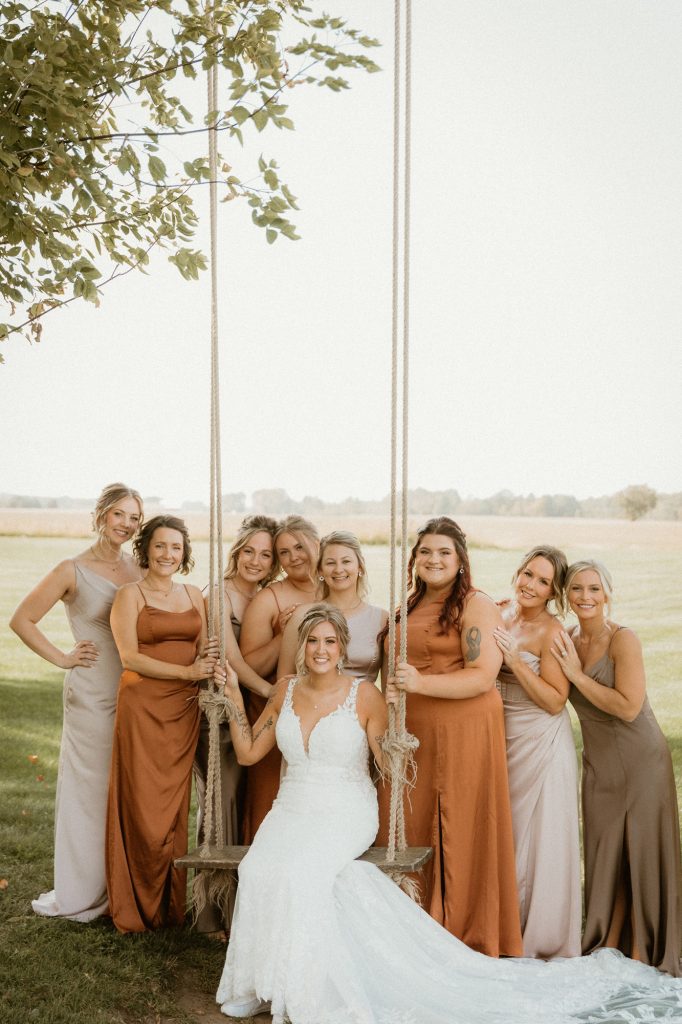
Photo by B Lauren Photography
How to Plan When Guests Have Very Different Budgets
This is the part most bachelorette guides skip, and it matters more than any splitting app. In almost every wedding party, there’s a range: someone just bought a house, someone is in grad school, someone has three other weddings this year. Here’s how to plan a celebration that includes everyone without shaming anyone.
1. Ask for budgets anonymously before planning anything. Have the organizer send a quick anonymous poll (Google Forms works perfectly) asking each guest for a comfortable all-in number, including travel. Plan to the lowest comfortable budget, not the average. A trip planned around the median still excludes the person at the bottom.
2. Set the total cost expectation upfront, before anyone commits. Every invite should come with an honest estimate: “This trip will run about $450 to $600 per person, all-in.” Springing surprise costs on guests mid-trip, after they’ve already committed, is how resentment starts. People can plan for a number they know; they can’t plan for costs that keep appearing.
3. Build the trip in tiers with a low-cost core. Structure the itinerary so the essential, everyone-together moments are affordable: the shared house, a home-cooked group dinner, a beach day, a games night. Then make the expensive extras (the boat charter, the spa morning, the fancy tasting menu) optional add-ons. A guest who skips the spa still gets the full heart of the trip, not a lesser version of it.
4. Normalize opting out, loudly and early. The organizer should say it explicitly in the group chat: “Every activity except dinner Saturday is opt-in, and no one needs a reason to skip anything.” When opting out is framed as a normal choice rather than an admission, budget-stretched guests don’t have to choose between overspending and explaining their finances to the group.
5. Never itemize someone’s hardship in front of the group. If a guest tells the organizer she’s struggling, that conversation stays private. The organizer can quietly adjust (a cheaper room tier, skipping her share of an add-on) without announcement. Public generosity that identifies its recipient usually feels like charity, not kindness.
6. Let willing guests subsidize invisibly. Sometimes a few better-off bridesmaids genuinely want to cover more, maybe picking up the decorations, a group dinner, or a bigger share of the bride’s portion. Wonderful, but route it through the organizer so it lowers the shared total for everyone rather than singling anyone out. The group message is simply “good news, the total came down.”
7. Consider distance and travel costs too. A $300 weekend is not the same ask for a local guest as for one flying across the country. If most of the party lives near the bride, picking a closer destination is often the single biggest cost-saver available, and driving distance means guests can also save by carpooling.
8. Remember that presence beats presents. If someone truly can’t swing the trip, give her a graceful role anyway: joining a video toast, coming to a local pre-trip dinner, or helping plan. Missing the trip shouldn’t mean missing the celebration, and a bride worth celebrating would rather have her friend at the wedding than in debt.

Bachelorette Budget Benchmarks
For rough planning, most domestic weekend bachelorette trips run $300 to $700 per person all-in, with destination-heavy trips (Nashville, Scottsdale, Miami, Vegas) commonly reaching $700 to $1,500 or more once flights are included. A local celebration, like a night out, a cottage weekend within driving distance, or a spa day, can deliver just as much fun for $100 to $300 per person. There’s no rule that says a bachelorette needs a boarding pass; some of the best celebrations happen 40 minutes from home. And if wedding costs are stacking up across the board, our free wedding budget planner helps keep every celebration in view at once.
Frequently Asked Questions
Does the bride pay for anything on her bachelorette trip? Typically the bride covers her own travel to the destination and personal shopping, while guests split her lodging, meals, and activities. Some groups cover her flight too; agree as a group beforehand.
Does the maid of honor pay more for the bachelorette party? No. The maid of honor leads planning and coordination, but she pays the same share as every other guest unless she chooses to contribute more.
How do you ask bachelorette guests about their budget? Use an anonymous poll before planning begins, asking for a comfortable all-in number. Then plan the core trip around the lowest comfortable budget and make pricier activities optional.
What if a guest backs out after booking? Set a written deadline upfront: after final booking, a guest who cancels still owes her share of non-refundable costs like lodging. Collecting deposits early makes this rare.

Celebrate the Bride, Not the Balance
A great bachelorette trip isn’t measured by how much it costs; it’s measured by whether everyone the bride loves is there, relaxed, and having fun. Agree on your splitting method early, track expenses in one place, plan to the lowest budget with optional upgrades, and keep every money conversation kind and private.
For more planning help, browse our bachelorette and bachelor party ideas, and when it’s time to plan the main event, find every pro you need in Nearlywed’s Michigan wedding vendor directory. Now go make the group chat proud!
you might also like
Check Out The Latest on Instagram
Check Out The Latest on Instagram
Follow us on Facebook and Instagram for more tips, resources, and inspiration!